If you’ve ever held a lithium-ion battery (LIB) — whether in a smartphone, a power tool, or an electric vehicle — you’ve probably never stopped to think about the thin, specialized tapes holding its core components together. But as a supplier of lithium-ion battery special adhesive tapes, I spend every day talking to battery engineers who count on these small, unassuming materials to keep cell stacks, tabs, and insulators secure, even under extreme operating conditions. One question comes up again and again: What is the tensile strength of these tapes, and why does it matter so much for LIB performance and safety? Lithium‑ion Battery Special Adhesive Tapes
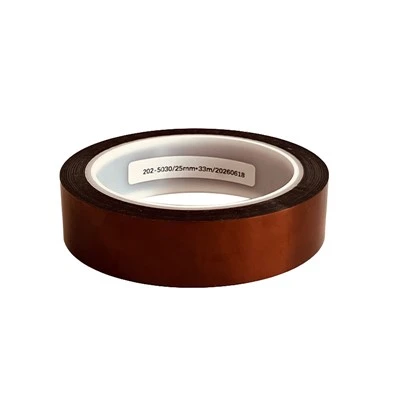
First, let’s ground this in what tensile strength actually means for this specific use case. Tensile strength, in simple terms, is a material’s ability to resist stretching or breaking under a pulling force. For standard office tape or packaging tape, a tensile strength of a few pounds per inch might be enough, but for LIB applications, that number is non-negotiable — it has to balance the physical demands of manufacturing, thermal expansion, and long-term cycle life. LIBs operate in environments that swing from -40°C for cold-weather EV use to 80°C for fast-charging consumer electronics, and their internal components (like anode and cathode foils) expand and contract with every charge and discharge. Any adhesive tape that’s too weak will stretch over time, leading to loose cell stacks, misaligned tabs, or even internal short circuits — a risk that can turn a battery’s day-to-day use dangerous.
At our facility, we’ve spent years testing and refining formulations for our LIB special adhesive tapes, and we can tell you that tensile strength isn’t a single fixed number. It varies based on three key factors: the tape’s backing material, the adhesive system, and the specific grade designed for a LIB application. Let’s break this down because this is where most general adhesive suppliers get it wrong — using off-the-shelf materials that don’t account for LIB’s unique stresses.
The backing is the tape’s structural foundation, and it directly dictates its baseline tensile strength. For LIB applications, we work with three primary backings: cross-laminated polypropylene (PP), polyester (PET), and aramid films. Cross-laminated PP is the workhorse for internal cell assembly, offering a flexible yet tough base that resists stretching during winding or stacking. Its tensile strength clocks in at around 15 to 25 pounds per inch (lbf/in) — enough to hold a 18650 cell stack tightly during automated manufacturing, where winding speeds can hit 100 meters per minute. PET, by contrast, is stiffer and more dimensionally stable, making it ideal for structural components like tab insulation or case sealing. Our PET-based tapes have a higher tensile strength, ranging from 30 to 50 lbf/in, which is critical for securing large-format pouch cells used in EV batteries, where the cell’s weight puts consistent pulling force on the seal tapes. Aramid film, the most specialized of the three, is used for high-temperature applications, like near a battery’s thermal management system. Aramid’s tensile strength is unmatched here, at 70 to 90 lbf/in — a number that ensures the tape won’t fail even if a cell’s local temperature spikes temporarily during fast charging.
Then there’s the adhesive, which ties the backing to the battery’s components and modifies how tensile strength performs in real conditions. We don’t use pressure-sensitive acrylic adhesive like standard packaging tapes — that’s too soft and will creep (slowly stretch under constant force) over time, especially at high temperatures. For LIBs, our tapes use modified acrylic adhesives, some with cross-linked formulations that add a layer of chemical resistance to lithium electrolytes, others with silicone for extreme cold. The adhesive’s shear strength (a related metric, but different from tensile strength) affects how the tape holds, but its compatibility with the backing determines the overall usable tensile strength. For example, a cross-laminated PP tape with a standard acrylic adhesive might have a nominal tensile strength of 20 lbf/in, but once exposed to a LIB’s electrolyte (like ethylene carbonate), that adhesive can weaken by 10 to 15 percent, dropping the effective tensile strength to 17 lbf/in. That’s why we test every adhesive-backing combination in simulated electrolyte conditions before it leaves our warehouse — a step most small suppliers skip, leading to premature tape failure in battery packs.
Now, let’s put these numbers into context of what real LIB manufacturers actually need. A small consumer electronics maker building smartphone batteries needs tapes that can handle automated pick-and-place during assembly, where a tape must hold a tab in place while a spot welder connects it to the circuit board. Their required tensile strength is around 20 to 30 lbf/in — too low, and the tape will slip during welding, ruining thousands of cells per shift. An EV manufacturer, though, builds large pouch cells that weigh several kilograms; their tapes have to hold the cell’s stack together for 10,000 charge cycles, withstanding the expansion of graphite anodes that can swell by up to 10 percent during charging. That’s where a 40 to 50 lbf/in PET tape comes in — and even aramid tapes for high-heat areas, because a failed seal in an EV battery can lead to thermal runaway, a catastrophic event that’s dangerous for drivers and costly for manufacturers.
I’ve seen firsthand what happens when tensile strength is miscalculated. A few years back, we worked with a startup that used a generic industrial tape for their drone battery packs. The tape’s nominal tensile strength was listed as 25 lbf/in, which sounded like it would work — but they didn’t account for the drone’s flight vibrations and the battery’s repeated expansion. After 50 charge cycles, the tape stretched, the cell stack shifted, and the tabs pulled free from the circuit board, causing several drones to crash during test flights. We tested their original tape and found that its effective tensile strength at 60°C (the battery’s operating temperature) was only 12 lbf/in — half the number they relied on. We redesigned a tape with a cross-linked adhesive and a 35 lbf/in tensile strength, and their failure rate dropped to less than 0.1 percent. That’s the difference between off-the-shelf products and a specialized LIB adhesive supplier: we don’t just quote a tensile number — we adjust it for the conditions the tape will actually face.
Another common misconception is that higher tensile strength is always better. That’s not true for LIBs, because too stiff a tape can cause its own problems. If a tape has a tensile strength of 100 lbf/in, that means it’s very rigid — but as the battery’s components expand, the rigid tape won’t stretch with them, creating stress points that can crack the tab or peel away from the cell. We engineer our tapes to have a tensile strength matched to the application: low enough to flex with the cell’s movement, but high enough to resist breaking during assembly and operation. For example, our tapes for winding small cylindrical cells have a tensile elongation (the amount a tape can stretch before breaking) of 15 to 20 percent, which means they can stretch slightly to accommodate winding tension without snapping. Our EV pouch cell tapes, by contrast, have a lower elongation of 5 to 8 percent, because they’re meant to provide rigid support, not flex too much.
Testing tensile strength for LIB tapes isn’t just pulling samples in a lab either. We follow several industry standards to ensure accuracy, including IPC-TM-650 (Test Method for Printed Board, Assembly, and Handling) and UL 510 (Standard for Safety for Lithium Batteries). These standards dictate how we test: we cut tapes to a 1-inch width, grip the ends in a tensile tester, and pull at a rate of 12 inches per minute, measuring the force at which the tape breaks. We also test after exposure to temperature extremes (-40°C to 85°C) and electrolyte solutions, because a tape’s room-temperature tensile strength is useless if it drops in a battery’s actual operating environment. For our standard PP tapes, after 1,000 hours in 60°C electrolyte, we see a tensile strength retention rate of 85 percent, which meets the requirements for most consumer and automotive applications.
As a supplier, we’re constantly refining these numbers to meet the evolving needs of the LIB industry. With next-generation solid-state batteries coming to market, the conditions are even more demanding: solid electrolytes are more corrosive, and batteries operate at higher voltages and temperatures. We’re currently developing a new aramid-based tape with a tensile strength of 95 lbf/in, designed to resist both electrolyte exposure and the higher thermal stresses of solid-state cells. Early testing shows it retains 90 percent of its tensile strength after 1,500 hours in simulated solid electrolyte, which we expect will become a standard requirement for EV manufacturers by 2027.
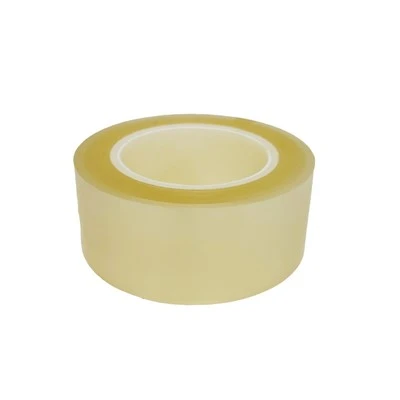
If you’re a battery engineer, pack designer, or manufacturer struggling to find a tape that balances the right tensile strength, thermal resistance, and electrolyte compatibility for your LIB design, we’re here to help. We offer custom formulations, in-house testing, and samples tailored to your specific application, whether you’re building smartphone batteries, electric vehicle packs, or energy storage systems. Don’t let a miscalculated tape’s tensile strength lead to costly failures — reach out to our team to discuss your requirements today.
Specialty Tapes References
- IPC-TM-650, Test Method 2.2.18: Tensile Strength and Elongation of Adhesive Tapes, Institute for Printed Circuits, 2021.
- Liu, Y., et al. “Adhesive Materials for Lithium-Ion Battery Packaging and Assembly,” Journal of Power Sources, vol. 489, 2021, p. 229457.
- UL 510, Standard for Safety for Lithium Batteries, Underwriters Laboratories, 2022.
- Wang, H., et al. “Thermal-Mechanical Performance of Adhesive Tapes for EV Battery Cell Stacking,” Journal of Energy Storage, vol. 55, 2022, p. 105872.
Jiangsu Jinjiayi Electronic New Materials Co., Ltd.
With abundant experience, we are one of the most reliable lithium‑ion battery special adhesive tapes manufacturers and suppliers in China. We warmly welcome you to buy bulk lithium‑ion battery special adhesive tapes in stock here and get quotation from our factory. Customized orders are welcome.
Address: No.3 Taihu West Road, Changshu-Sihong Industrial Park, Sihong County, Jiangsu Province
E-mail: cshxdz@163.com
WebSite: https://www.jjyelec.com/
