If you’re browsing for Small Modular Air Separation Units (SMASUs) — especially if you’re an engineer, plant manager, or someone who’s been weighing options to get reliable oxygen, nitrogen, or argon on a smaller, more flexible scale — you’ve probably run into the terms cryogenic and non-cryogenic. As a SMASU supplier that works with hundreds of clients across manufacturing, food and beverage, pharmaceuticals, and energy, one of the most common questions I get is: “Which one is right for me?” Small Modular Air Separation Unit

It’s not a trivial choice. Picking the wrong type can lead to wasted energy, higher long-term costs, or a unit that can’t keep up with your actual gas demand. I’ve seen teams jump into a purchase without fully understanding the core differences, only to run into headaches down the line, so let’s break this down like I would in a conversation around our office.
First, let’s start with the basics: what do these units do, anyway? Both cryogenic and non-cryogenic SMASUs take in atmospheric air — which is 78% nitrogen, 21% oxygen, 0.9% argon, and tiny traces of other gases — and separate it into its pure component gases. The end goal is the same, but how they get there, and what they’re good for, could not be more different.
The Core Process: Cryogenic SMASUs
Let’s start with cryogenic. The name gives a hint: “cryo” refers to extreme cold. For cryogenic air separation, we cool compressed air down to temperatures well below -183°C (-297°F), which is the boiling point of oxygen. Nitrogen boils at a lower temperature (-196°C / -321°F), and argon falls somewhere in between.
The process works like this: First, we filter and compress ambient air, then remove water vapor, carbon dioxide, and other trace contaminants to prevent them from freezing and clogging the system. Next, the clean, compressed air is passed through a heat exchanger, where it’s cooled by the cold nitrogen and oxygen gases that have already been separated — it’s a closed loop, so we’re reusing that cooling energy instead of wasting it.
Once the air hits those ultra-cold temperatures, it turns into a liquid. We then feed that liquid air into a distillation column, a tall, insulated tower where the different gases separate based on their boiling points. Because nitrogen evaporates first, it rises to the top of the column, where we capture it as high-purity nitrogen gas. Oxygen, being heavier, stays at the bottom, where we collect it as liquid or gaseous oxygen. Argon, which has a boiling point between the two, is captured as a mid-stream product, with additional distillation steps to get it to the 99.9% purity many industrial users need.
Cryogenic units, even the modular small-scale ones we build, are designed for one big thing: high-volume, ultra-high-purity gas production. Most cryogenic SMASUs can deliver oxygen, nitrogen, or argon at 99.5% to 99.999% purity — that’s five nines, which is the standard for critical applications like semiconductor manufacturing, medical oxygen supply chains, or large-scale food freezing.
But here’s the catch: cryogenic systems have a steep upfront cost, and they’re most efficient when they’re running continuously at full capacity. If you only need a small amount of gas, or if your demand fluctuates a lot (say, you only need 5 tons of nitrogen a month, not 50), the energy and resources needed to cool that air to liquid temperatures can end up being way more expensive than other options. We always tell clients: cryogenic is great if you’re looking for a long-term, high-volume, high-purity solution — but it’s not a one-size-fits-all.
The Core Process: Non-Cryogenic SMASUs
Now, non-cryogenic — sometimes called “gas separation at ambient temperature,” which is a simpler way to put it. These units don’t use extreme cold; instead, they rely on two main technologies: pressure swing adsorption (PSA) or membrane separation. Both work at or close to room temperature, which is why they’re called non-cryogenic.
Let’s start with PSA, which is the most common non-cryogenic tech in SMASUs. Here’s how it works: PSA uses porous materials called adsorbents (usually zeolite) that trap specific gas molecules under high pressure. For example, if you want to produce nitrogen, you compress air and feed it into a tank filled with zeolite. The zeolite pores are small enough to let oxygen, argon, and other small molecules pass through, but they trap the larger nitrogen molecules. That means you get a stream of 95% to 99.5% pure nitrogen coming out the other end — no cooling required.
When the zeolite is full of nitrogen, you drop the pressure in the tank, and the trapped nitrogen is released, or “regenerated,” so the adsorbent can be used again. Most PSA units have two tanks that switch back and forth, so you get a continuous stream of gas without interruptions.
Membrane separation works a little differently, and it’s even simpler for some smaller applications. Membranes are thin, selective films (usually made of polymers) that let certain gas molecules pass through faster than others. For nitrogen production, for example, oxygen molecules move through the membrane much quicker than nitrogen, so you’re left with a nitrogen-rich stream on one side. Membrane non-cryogenic units are smaller, lighter, and have fewer moving parts than PSA, which makes them a popular pick for very low-demand applications.
Non-cryogenic units have their own sweet spot: they’re cheaper upfront, they have lower operating costs for smaller volumes, and they can scale up or down with your demand. If you only need 100 cubic meters of nitrogen an hour, or you have seasonal fluctuations in gas use, non-cryogenic is almost always the better call. The purity is good too — most non-cryogenic units deliver 95% to 99.5% purity, which is enough for applications like food packaging, metal cutting, or general industrial inerting. For reference, 99.5% nitrogen is enough to keep packaged chips crispy, or to prevent rust in a storage tank, while 99.999% is needed for making microchips, which is a big difference.
So What Are the Key Practical Differences, Beyond the Process?
As a SMASU supplier, I’ve seen clients fixate on purity, but there are other factors that make or break a decision. Let’s lay these out clearly, because they’re the things that will actually impact your day-to-day operations.
First, energy efficiency. Cryogenic units take a lot of power to compress air and cool it to -180°C. For a unit that runs 24/7 at full capacity, that energy cost is spread over a large volume of gas, so it’s efficient. But if you run a cryogenic unit at 50% capacity, or shut it down part of the day, the energy used to cool the system down is wasted — it’s like leaving your freezer running empty all night. Non-cryogenic units, on the other hand, match your demand almost perfectly. If you need less gas, you can lower the compressor pressure or slow the process, so you only use the energy you need. That’s a huge win for smaller operations or businesses with variable demand.
Then there’s scalability and footprint. Modularity is the whole point of SMASUs, right? Cryogenic units, even the small modular ones, need insulation, distillation columns, and heavy heat exchangers, so they take up more space, and expanding them later usually means adding a whole new column. Non-cryogenic PSA or membrane units are much more compact; you can add a small additional tank or a membrane module if your gas demand grows, without a full system overhaul. For businesses with limited on-site space, that’s a game-changer.
Maintenance is another big one. Cryogenic systems have more moving parts, insulated lines that can get damaged, and distillation columns that require periodic cleaning and inspection. If something goes wrong, it often means shutting down the entire unit for hours or days to thaw and fix. Non-cryogenic units have fewer components; PSA adsorbents just need occasional replacement (every 3 to 5 years, usually), and membrane units have almost no moving parts at all. Downtime is way lower, which is critical if you can’t afford to lose gas for a production run.
And let’s talk about gas types and byproducts. Cryogenic units aren’t just for oxygen and nitrogen — they can separate argon, krypton, xenon, and other rare gases, which are valuable for industries like lighting or research. Non-cryogenic units can only separate a few common gases (mostly oxygen and nitrogen), and they can’t reliably capture those rare byproducts. If you need multiple gas types, or you’re looking to extract a secondary product from your air separation, cryogenic is the only option.
When Should You Pick Which?
I get that this can still feel fuzzy, so let’s tie this to real client scenarios we’ve worked with, to make it concrete.
If you’re a food and beverage manufacturer running a small to medium production line, needing 2 to 10 tons of nitrogen a month for packaging your products, non-cryogenic is the way to go. It’s cheaper to buy, easy to install on your factory floor, and you can adjust it if your sales pick up next year. We’ve had snack packaging clients switch from bulk nitrogen delivery (which comes with delivery fees and long lead times) to non-cryogenic PSA units, and they’ve cut their gas costs by 40% in the first year.
If you’re a hospital needing reliable medical oxygen for your emergency room, or a semiconductor plant needing high-purity nitrogen to clean wafer production lines, cryogenic is non-negotiable. Medical oxygen requires 99.5%+ purity, and most small bulk oxygen deliveries for hospitals rely on cryogenic production plants — a cryogenic SMASU lets you have that production on-site, so you don’t have to worry about supply chain delays. Semiconductor manufacturing needs 99.999% purity, which non-cryogenic can’t deliver without extra steps that kill efficiency.
There are edge cases, too. For example, a small craft brewery that uses a mix of nitrogen for beer dispensing and oxygen for wort aeration: a non-cryogenic PSA unit can do both, but if they scale up to a larger production, they might look at adding a small cryogenic unit for argon. Or a metal fabrication shop that cuts steel: non-cryogenic works for general cutting, but if they start working with aerospace parts that require high-purity inerting, they’ll need to switch to cryogenic.
Common Mistakes I See Clients Make
Over the years, I’ve seen two mistakes that trip people up all the time. First, thinking that “small modular” automatically means non-cryogenic. We build both cryogenic and non-cryogenic SMASUs, because modular just means they’re factory-built, tested, and shipped as a single unit (or a small set of units) instead of being assembled on-site. A 5-ton-per-day cryogenic SMASU is still modular — it’s just smaller than a traditional 50-ton cryogenic plant. The size doesn’t change the core process.
Second, underestimating the total cost of ownership. It’s easy to look at the upfront price tag: a small non-cryogenic unit might cost $50,000, while a cryogenic SMASU of the same output might cost $200,000. But when you add up delivery fees for bulk gas (which can add $0.50 to $1 per cubic meter every month), energy waste, and downtime, that non-cryogenic unit might save you $100,000 over 5 years. Conversely, someone who buys a cheap non-cryogenic unit for a high-volume, high-purity job will end up paying more in energy and maintenance than they would have for a cryogenic unit.
Final Thought for Your Decision
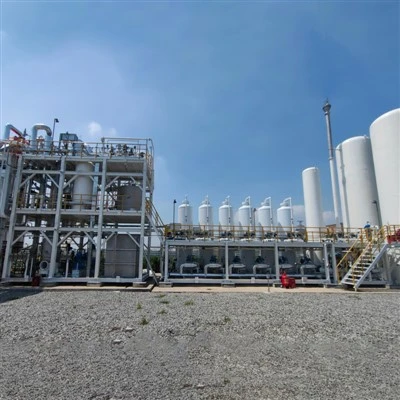
At the end of the day, the difference between cryogenic and non-cryogenic SMASUs boils down to three questions: How much gas do you need, how pure does it need to be, and how predictable is your demand? If you need high volume, ultra-high purity, or multiple gas products, cryogenic is the right choice. If you need lower volumes, good enough purity, and flexible demand, non-cryogenic will save you time and money.
Key Components I don’t push one over the other — our job as a SMASU supplier is to match the unit to your specific needs, not sell you what’s most expensive. If you’re still not sure which is right for your operation, reach out to us to discuss your requirements, and we’ll walk through the pros and cons of each option tailored to your business.
References
- Air Separation: Principles and Practice, Elsevier
- Small Modular Air Separation Unit Market Report, Industrial Gas Manufacturers Association
- Pressure Swing Adsorption for Gas Separation, Journal of Chemical Engineering
Chengdu Hi-tech Panda Energy Technology Co., Ltd.
With abundant experience, we are one of the most professional small modular air separation unit manufacturers in China. Please feel free to buy high quality small modular air separation unit for sale here from our factory. Also, customized service is available.
Address: No.1604, 16th Floor, Unit 2, Building 1, No.1700, North Section of Tianfu Avenue, Chengdu High-tech Zone, China (Sichuan) Pilot Free Trade Zone
E-mail: Haikepanda-sos@aliyun.com
WebSite: https://www.haike-energe.com/
