Hey there, forklift drivers, fleet managers, and anyone who’s ever stared at an LPG forklift and wondered, “Can I just jump in and go?” I’m Jake, and I’ve been selling LPG forklifts for just over 7 years now—worked in parts, serviced them, talked to hundreds of drivers every week. One question pops up more than “Does this thing actually last the winter?” and it’s this: Do you need special training to operate an LPG forklift? LPG Forklift
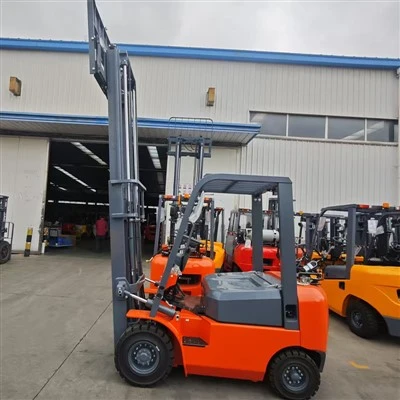
Short answer? Yeah, you do—but before you scroll past thinking, “Ugh, another boring OSHA rant,” let me break this down like I would for a new driver walking into our shop for their first test drive. This isn’t just red tape; it’s the difference between a safe shift, a damaged pallet, or a trip to the ER. And as someone who’s seen way too many drivers cut corners because they thought “it’s just a forklift,” I’m gonna keep this real.
First, let’s get one thing straight: LPG forklifts aren’t electric, and they’re definitely not diesel. They sit somewhere in the middle, right? Electric ones are quiet, easy to start, no fumes. Diesel ones are big, loud, great for heavy loads outdoors. LPG? They’re versatile—run indoors and out, powerful enough for most warehouse and yard work, start up fast, and don’t leave you waiting around for a battery to charge. But that versatility means they have specific quirks electric and diesel don’t, quirks you can’t just pick up by watching a YouTube video.
Let’s start with the obvious stuff, because that’s where most people mess up. LPG is propane, right? It’s a flammable gas stored under pressure in that big tank on the back of the forklift. I’ve seen drivers try to swap a tank without turning off the fuel valve—spill a little gas on the frame, and boom, if there’s a spark from the starter? Not a good day. Or they’ll check the tank like they check a car’s gas gauge—just glance at the meter—instead of doing a quick pre-use check for leaks. You know how? With soapy water. Mix a little dish soap and water, spray it on the valve, line, and connections. If bubbles form, that’s a leak, and you can’t operate it until it’s fixed. That’s not something you learn from a buddy saying “I’ve been driving these for 20 years, never had a problem.” That’s training.
Then there’s the operation itself. LPG forklifts have a different torque curve than electric or diesel. Electric forklifts give you full torque the second you press the pedal—super quick, good for precise moves in tight aisles. Diesel takes a second to rev up, but once it does, it’s a beast. LPG is in between, but it reacts way different when you’re lifting loads. I had a new driver last month—guy was used to electrics—who tried to lift a 2,500-pound pallet too fast, and the forklift tilted back. Why? Because LPG engines, at low RPM, have a little more “push” than electrics do. If you don’t adjust your speed and lift rate, you’re gonna tip over. And tipping is the number one cause of forklift-related fatalities, right? OSHA says it kills like 30 people a year in the US alone. Training teaches you how to feel that torque, how to slow down when lifting heavy loads, how to center that tank weight when turning. That’s not “common sense”—that’s specific to LPG.
Wait, what about indoor use? A lot of warehouses swap to LPG because electrics need batteries swapped every 8 hours, which means downtime, and diesel fumes are bad for enclosed spaces. But LPG still emits fumes. Not as bad as diesel, but still carbon monoxide and nitrogen oxides. If you don’t know how to check the exhaust system—make sure the muffler is intact, no holes in the exhaust line going to the outside—you’re exposing yourself to fumes while you’re working. I once had a customer’s driver who skipped checking that, and passed out in the warehouse at 2 a.m. when everyone else left. Scared the night shift security guard half to death. Training covers that—how to do a quick exhaust check, how to recognize if the cab is getting too fumes-heavy, what to do if the alarm goes off. None of that is in a basic forklift training course for generic forklifts.
Oh, and refueling or swapping tanks. A lot of new LPG drivers get this wrong. They’ll park the forklift anywhere, just yank the old tank out, and drop the new one in. No—you have to park on level ground, turn off the engine, close the fuel valve on the tank, and make sure the hose is disconnected properly. And don’t over-tighten the connection when you put a new tank on. I’ve seen a driver over-tighten so hard, the valve stripped, and the tank leaked all over the yard over the weekend. By the time someone found it, it was a ticking time bomb. Training teaches you that—step-by-step, so it becomes habit, not something you figure out when you’re in a hurry to get back to the line.
Now, I know what some of you are thinking. “I drove a LPG forklift once for a weekend job, no training, did fine.” Cool, I’ve seen that too. But here’s the thing— that was a small load, on flat ground, no one else around. What if you’re moving a 5,000-pound pallet around a crowded warehouse? Or you’re working in a dock area with uneven concrete? Or you have to park the forklift on a slight slope for 10 minutes? Those are the moments when not knowing the specific stuff about LPG bites you. Last year, a customer called me in a panic because their driver tipped a full pallet of glass bottles because he didn’t know how the LPG tank’s weight shifts when the forklift turns. The driver was fine, but the bottles? $12,000 worth of lost product, plus the forklift frame got bent. That’s avoidable with proper training.
Wait, what do actual training programs cover anyway? Not just “don’t crash.” For LPG, they teach you the specific hazards of propane: flammability, pressure levels, how to handle a leak. They teach you how to adjust the engine for optimal performance—like, if you’re working in really cold weather, you need to let the engine warm up a minute longer than a diesel, because LPG vaporizes slower when it’s cold. If you skip that, you’ll lose power mid-shift, which is bad if you’re hauling a load up a ramp. They also cover emergency procedures specifically for LPG: what to do if a tank starts leaking, how to turn off the fuel supply fast, how to evacuate if there’s a fire. Generic forklift training doesn’t go deep on that stuff. OSHA actually requires that equipment-specific training be done, right? So if you’re operating an LPG forklift, that’s a separate training module you need, not just the 4-hour basic course you took 5 years ago.
Now, let’s be real— I’m a forklift supplier, so I’m not gonna sit here and say training is unnecessary. But I’ve also seen companies skip training to save money, and that ends up costing way more. We had a client last quarter who skipped LPG-specific training, hired a driver who’d only operated electrics, and he totaled a $30,000 rack system in the first week. They didn’t have insurance cover it because they couldn’t prove he was properly trained. That’s $30k down the drain, just to skip a two-day training course that would’ve cost them like $800 total. Doesn’t make sense, does it?
And here’s the good part—training doesn’t have to be all stuffy, boring lectures. We work with a bunch of certified trainers who do hands-on sessions, so drivers get to actually swap LPG tanks, do leak checks, practice lifting heavy loads, and simulate a leak emergency in a safe environment. Way better than a book, right? We also offer on-site training for big fleets, so they don’t have to pull drivers off the line for long. It’s tailored to LPG specifically, so drivers learn exactly what they need for the equipment they’re running every day.
Wait, do I have to retrain if I switch brands of LPG forklifts? Not usually, but some brands have tiny little quirks. Like, one brand’s fuel valve is on the left, another’s is on the right. A good LPG-specific training course will cover that, even if you’re switching between models. Because the core stuff—handling LPG, torque adjustments, safety checks—stays the same, but there are small differences that are easy to mess up if you don’t know.
I get it, training is another expense, another thing on the to-do list. But think about it this way: the people operating your forklifts are moving hundreds of thousands of dollars worth of product, and their lives are on the line if something goes wrong. Skipping LPG-specific training isn’t cutting costs—it’s gambling. I’ve been in this long enough to see the bad outcomes, and I’ve seen the good ones too. Companies that invest in training have lower accident rates, less equipment damage, and their drivers are more confident on the job.
If you’re reading this and thinking, “We need to get our team trained,” or “We’re looking for LPG forklifts for our warehouse,” hit us up. We don’t just sell equipment—we can connect you with certified LPG-specific training programs, answer any questions you have about operating these forklifts safely, and help you find the right model for your needs. No sales pitch pressure, just real talk about what works and what doesn’t when it comes to LPG forklifts.
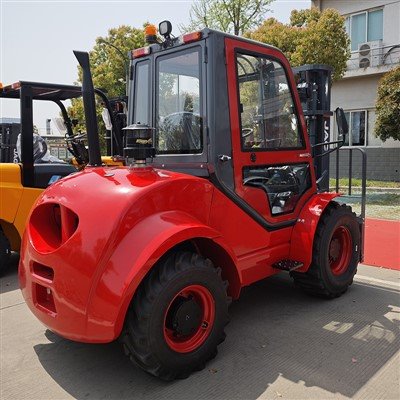
At the end of the day, LPG forklifts are amazing machines—versatile, powerful, way more reliable than people give them credit for. But like any piece of heavy equipment, they have specific rules and quirks that you can’t wing. Special training isn’t just a box to check; it’s how you keep your drivers safe, your product intact, and your operations running smoothly. Don’t cut corners on this one.
References
Warehouse Forklift Occupational Safety and Health Administration. "Forklift Safety." OSHA, U.S. Department of Labor, 2024.
National Institute for Occupational Safety and Health. "Forklift-Related Fatalities, 2011–2020." NIOSH, Centers for Disease Control and Prevention, 2022.
Propane Education and Research Council. "LPG Forklift Operation Safety Guidelines." PERC, 2023.
Qingdao Dawnshine Heavy Industry Co., Ltd.
As one of the most professional LPG forklift manufacturers and suppliers in China, we have world-leading production equipment and strong manufacturing capabilities. Welcome to wholesale discount LPG forklift in stock here and get quotation from our factory. For price consultation, contact us.
Address: South Side of Qiwang Road, Yueshan Village, Naoshan Economic Development Zone, Qingzhou City, Shandong Province, China
E-mail: laven.wang@china-dawnshine.com
WebSite: https://www.ds-forklift.com/
