Hey everyone, High-Voltage Distribution Box
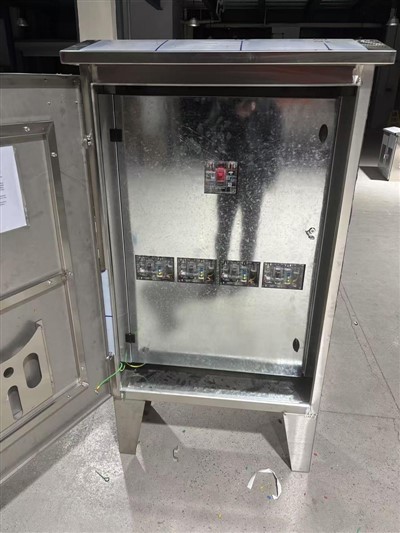
If you’ve ever walked past a substation or glanced at a high-voltage distribution box (HVD box for short), you might’ve thought, “What’s that weird little glass-and-metal component tucked inside, anyway?” As someone who’s spent the last 8 years building and supplying HVD boxes (yep, that’s my day job!), I get this question all the time—especially from electricians, facility managers, and even some folks who just want to know why their local power doesn’t go out every time a storm hits. Today, let’s break down the real purpose of fuses in these boxes, no stuffy engineering jargon, I promise.
First, let’s set the scene. High-voltage distribution boxes are the middlemen of the power grid. Think of it like this: power plants crank out super high-voltage electricity (like 11,000 volts or more) because it travels way better over long distances. But once that power gets to your neighborhood, school, or factory, it needs to get stepped down to a safer, lower voltage (like 240V for your house, 480V for a factory’s big machines). The HVD box is where that transition happens, and it’s also the first line of defense for everyone connected to that section of the grid. That’s where fuses come in.
Wait, let’s get one thing straight: a lot of people mix up fuses and circuit breakers. I’ve had so many clients call me up asking for a “fuse breaker” like it’s one thing, but they’re totally different. A fuse is a one-and-done safety device—once it blows, it’s dead. A circuit breaker is a reusable switch that you can flip back on. In HVD boxes, fuses are actually preferred for a lot of high-voltage jobs, and here’s why: they’re simpler, faster, and way more reliable for the extreme voltages we’re dealing with here. No tiny electronic sensors to glitch out, just a little metal wire that’s built to melt when things go wrong.
So, what exactly do they do? Let’s walk through a worst-case scenario. Suppose a tree falls on the power line feeding into your HVD box. That’s a short circuit—think of it like a super high-speed tunnel for electricity to escape, instead of going where it’s supposed to. That sudden surge of power can reach thousands of volts in a split second. If there were no fuse, that surge would keep going through the box, into the lower-voltage lines, and right into every device connected to that grid. You’d blow every light bulb, fry every factory machine, and maybe even cause a fire. Fuses stop that.
Here’s how it works inside the HVD box: each fuse is rated for a specific amount of current it can handle. Like, a 100-amp fuse will let 100 amps flow through it without a problem, but if the current goes over that—say, 1,000 amps from a short circuit—the tiny metal filament inside the fuse heats up so fast it melts in milliseconds. It’s like a fuse that blows before you can even blink. When that filament melts, it creates a gap in the circuit, so the current stops dead in its tracks. No surge gets past that point, so the rest of the HVD box, and all the devices connected to it, stay safe.
But wait, that’s not all. Fuses also handle another common issue: overloads. Let’s say a factory is running 10 big air conditioners, a welding machine, and a warehouse lighting system all at once. Normally, the total current draw is within the fuse’s rating, so everything runs smooth. But if one AC unit shorts out on top of that, the total current spikes past the fuse’s limit. Again, the fuse blows before the overload can overheat the wires in the HVD box. Overheated wires are a huge fire risk, right? Fuses are basically the box’s fire escape, but for electrical issues.
Now, why fuses instead of, say, just thicker wires? Let’s do a quick test. If you have a wire that can handle 100 amps, but a short circuit brings 1,000 amps, that wire will heat up way faster than it can cool down. By the time the wire gets hot enough to cause a problem, the power surge would’ve already damaged your equipment. Fuses are designed to react way quicker—some high-voltage fuses react in 0.001 seconds. That’s way faster than any wire could melt or any circuit breaker could trip. For high-voltage applications, speed is everything. Even a tiny delay can lead to thousands of dollars in damage, or worse, injury.
I’ve seen this firsthand. A few years back, we supplied an HVD box to a manufacturing plant downtown. They had a custom piece of machinery that drew a lot of current, but it also had a history of occasional surges. The plant’s old box had a circuit breaker, and every time the machine surged, the breaker would trip—so workers had to shut down production, go flip the breaker, which cost them hours of downtime. We swapped in a set of high-voltage fuses rated for the exact current the machine needed, and added a spare set in the box for quick changes. A few months later, a minor surge hit—boom, the fuse blew. The plant’s workers noticed the power was out, pulled the spare, swapped it in in 2 minutes, and got back to work. No more hours of downtime, no more expensive equipment damage. That’s exactly what fuses are for: targeted protection for specific circuits, so only the bad part gets shut off, not the whole system.
Another big point: fuses are affordable and easy to maintain. When a circuit breaker goes bad, you have to test it, calibrate it, maybe replace the whole unit. But a blown fuse is cheap—we stock spare fuses in our warehouses, and most of our clients keep a few on hand for quick swaps. That’s a huge deal for businesses that can’t afford long outages. For high-voltage distribution boxes, which are often installed in remote areas or places where downtime costs thousands per minute, that simplicity is a game-changer.
Wait, but let’s address a common misconception: some people think fuses are “outdated” because circuit breakers are more common in home electrical panels. But high-voltage applications are totally different. The voltage is so much higher that circuit breakers can have trouble interrupting the flow without causing an arc flash—super hot, dangerous electrical sparks that can burn workers and damage equipment. Fuses, on the other hand, create that gap instantly, so there’s no time for a big arc flash. That’s why utilities and industrial facilities still rely on fuses as the primary protection in HVD boxes. It’s not that circuit breakers are bad—they have their place—but for high-voltage, fuses are the better, safer option.
Now, let’s talk about how we design fuses into our HVD boxes. Every box we build is custom for the client’s specific needs, right? We work with electricians and engineers to figure out exactly what voltage, current, and load the box will be handling, then pick the right fuses. For example, a box for a small office park might use 150-amp fuses, while a box for a steel mill uses 1,500-amp fuses. We also make sure the fuses are easily accessible—no digging through a pile of wires to swap one out. Some of our boxes have fuse holders with clear lids, so you can tell if a fuse is blown just by looking, no testing needed. That’s a small detail, but it makes a huge difference for maintenance crews.
I’ve also learned a lot from talking to our clients over the years. One client told me that a few years ago, a storm knocked a power line down near their HVD box. If their box didn’t have a properly sized fuse, the entire facility would’ve lost power for days, and their cold storage units (which held vaccines) would’ve spoiled. But the fuse reacted instantly, only shutting off that one section, so the rest of the facility stayed up. They told us that saved them over $200,000 in lost inventory. That’s when it hits you—fuses aren’t just a “part” in a box; they’re a safety net that protects people, businesses, and even critical supplies like medicine.
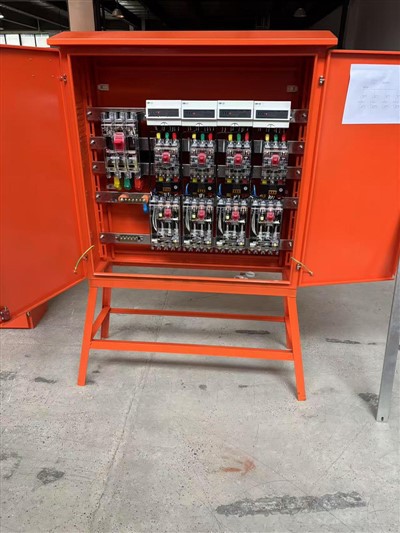
So, to wrap this up: the purpose of fuses in a high-voltage distribution box is twofold. First, they act as a fast-acting safety device that interrupts dangerous surges from short circuits or overloads, preventing fires, equipment damage, and injury. Second, they provide targeted protection, so only the affected circuit is shut off, minimizing downtime for the rest of the system. They’re simple, reliable, and affordable—perfect for the unique demands of high-voltage power distribution.
Distribution Cabinet If you’re in the market for a high-voltage distribution box, or you’re looking to upgrade your current setup to add better fuse protection, we’re here to help. We design and build custom HVD boxes tailored to your specific needs, with the right fuses to keep your system safe and running smoothly. Whether you’re a utility company, a factory, a commercial property, or a municipal facility, we can work with you to find the right solution. Don’t wait until a surge hits to make sure your system is protected—reach out to our team today to discuss your requirements and get a quote.
References
- "Electrical Safety for High-Voltage Distribution Systems" – Occupational Safety and Health Administration (OSHA), U.S. Department of Labor.
- "Fuse Technology for Power Distribution" – IEEE Transactions on Power Delivery, Vol. 35, No. 4, 2020.
- "High-Voltage Distribution Equipment Design and Standards" – National Electrical Manufacturers Association (NEMA), Publication No. SG 2-2021.
Anhui Nanxian Electric Co., Ltd.
With abundant experience, we are one of the most professional high-voltage distribution box manufacturers and suppliers in China. We warmly welcome you to buy advanced high-voltage distribution box for sale here and get quotation from our factory. All customized products are with high quality and low price.
Address: Factory Unit 03-2, Building 21, Feidong Yinfeng Industrial Park Co., Ltd., Northeast Corner of Manquan Road and Changle Road, Hefei Circular Economy Demonstration Park, Feidong County, Hefei City, Anhui Province.
E-mail: 541580567@qq.com
WebSite: https://www.nxelepower.com/
