If you’ve ever stood in a shipping warehouse, stared at a pile of generic, one-size-fits-all corrugated boxes, and thought, “There has to be a better way to protect my product,” you’re not alone. Over the past 12 years, as a corrugated packaging supplier, I’ve worked with hundreds of brands that started exactly where you are: knowing their products need a box, but not sure how to turn “need a box” into a custom solution that doesn’t waste space, money, or materials. Custom corrugated packaging isn’t just about making a box look different—it’s about engineering a package that works for your product, your supply chain, and your customers. Let me walk you through the step-by-step process I guide every client through, no fluff, no jargon, just real, tested advice. Corrugated Packaging Boxes
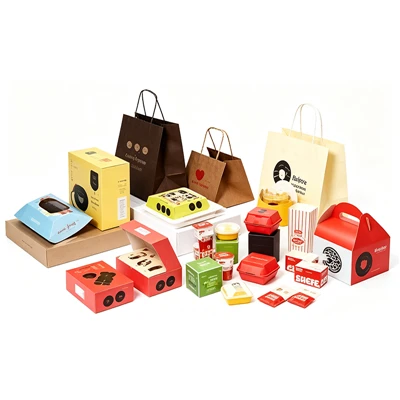
First, before you even pick up a pen or open a design tool, you need to get clear on one non-negotiable: your product’s unique needs. This isn’t a box for a random widget—it’s a box for your specific item, so skipping this step is how you end up with a box that’s too flimsy for a 2-pound ceramic mug or too bulky for a slim wireless headphone that gets tossed around in transit. I always tell clients to start with three core product details: dimensions, weight, and fragility. For dimensions, don’t just measure the product itself—measure the largest protruding parts too. That cute handle on your stainless steel water bottle? The glass lip on your custom lip balm tube? If you don’t account for those, you’ll end up with a box that won’t close, or you’ll waste extra void fill to compensate. Next is weight: this isn’t just the product’s weight, it’s the total weight of the filled box (product + void fill + labels). A box holding a 10-pound cast-iron pan needs a different corrugated board than a box holding two 1-ounce skincare vials. Then there’s fragility—this is where I see the most mistakes. If your product breaks when you drop it from 3 feet, that’s a different standard than a product that can survive a 6-foot drop. I always ask clients to do a quick, honest test: pick up your product, hold it at chest height, drop it onto a carpeted floor (the softest surface in your warehouse). If it cracks, chips, or moves around inside, you need to factor in cushioning, and that will directly affect the box design. Once I worked with a small candle brand that shipped their candles in a generic medium box, and 15% arrived broken—they thought the candles were just fragile, but it turned out the box was too big, so the candles slid around during shipping. We redesigned a box that was exactly the size of the candle, with custom cut foam inserts, and their breakage rate dropped to less than 1%. That’s the power of getting product details right before designing anything.
Next, you have to map your supply chain. A box that works perfectly in your local delivery network might fail in cross-country shipping, international logistics, or even your own warehouse handling. This is a step most first-time custom packaging buyers skip, and it’s the reason so many custom boxes end up being more expensive than they’re worth. Let’s break down what supply chain details matter. First, shipping distance and carrier requirements. USPS, UPS, FedEx, and regional carriers all have different dimensional weight rules—this is a big one. Dimensional weight (dim weight) is calculated by (length x width x height) divided by a carrier-specific factor (usually 166 for domestic US, 139 for international). If your box is too big, even if it’s light, you’ll get charged dim weight fees that can double your shipping cost. I once had a client who designed a beautiful custom box that was 2 inches too tall for their product, and when they shipped it, they paid an extra $0.75 per package—over 10,000 orders, that’s $7,500 in unnecessary costs. We adjusted the height to the exact product dimension, and they saved every penny. Then there’s how the box will be handled at each step: will it go on a pallet for cross-country trucking, where it will be stacked 10 high? Will it be hand-delivered to local customers, so gentle handling is assumed? Will it go through international customs, where it might be exposed to extreme temperatures or humidity? For a brand shipping winter hats to Alaska in the middle of January, you need a box that can hold up to cold, dry air without cracking. For a brand shipping plant-based skincare to tropical Southeast Asia, you need a moisture-resistant corrugated board to prevent mold. Even warehouse storage matters: if your boxes are going to be stacked for 4 weeks in a hot warehouse, you need a board with higher burst strength than a box that’s shipped and delivered in 2 days. I always ask clients to make a simple flow chart: where does the box go after it leaves our facility? What happens to it at each stop? That answers almost all the supply chain design questions.
Now, the part people get excited about: design and corrugated board selection. But before you start picking colors or adding your logo, you need to choose the right corrugated board type, because that’s the backbone of your box. Corrugated board has three main components: the liner (the flat, outer paper layer), the flutes (the wavy middle layer that gives the box its strength), and the inner liner. The flute size is the most important choice here, not just for strength but for how the box fits your product. There are five main flute types, but the most common for custom packaging are: A-flute, B-flute, and E-flute. Let’s cut through the marketing jargon: A-flute is the thickest, with large waves—great for heavy, fragile products that need maximum cushioning, like glassware or furniture parts. B-flute is thinner, with smaller waves, stiffer than A-flute, and better for products that need a flat surface for printing, like books or electronics. E-flute is super thin, very smooth for high-quality printing, perfect for retail packaging that customers will see in a store or on your website, like jewelry or small skincare items. Most people don’t know that you can also combine flutes for extra strength: double-wall corrugated board is two layers of flutes between three liners, which is for heavy items over 50 pounds, like appliances or large outdoor gear. For example, when that candle brand I mentioned earlier, their candles are small, but they’re glass and break easily. We chose B-flute corrugated board because it’s stiff enough to keep the box shape, and paired it with a custom foam insert made for E-flute to keep the candles snug, so they didn’t move around. Once you pick the flute, you choose the liner material: standard liner is 200# or 235# test, which works for most domestic shipping. If you need moisture resistance, you can get a coated liner or a water-based wax treatment, which adds a few cents per box but is worth it for humid climates or cold shipping.
Now, custom design: this is where you can make your box stand out, but it’s also where you can overcomplicate things. The goal of custom design is to balance brand identity with functionality. Let’s start with structural design first—this is the shape of the box. Most custom boxes are regular slotted containers (RSC), which are the standard box shape with flaps that meet in the middle. But if your product is oddly shaped, you can do a die-cut box, which is cut to a custom shape to fit your product exactly, no wasted space. For example, a custom wine bottle box is a die-cut shape, not an RSC, because it’s a long, narrow cylinder that would slide around in a standard box. For structural design, I always recommend that clients work with a designer who has experience with corrugated packaging—they’ll know how to make the box close properly, how to make it stackable, and how to avoid weak spots in the corners. Then there’s graphic design: printing your logo, brand colors, product info on the box. The most common printing methods for custom corrugated boxes are flexographic printing (flexo) and digital printing. Flexo is the best for large orders (1,000+ boxes), it’s cost-effective and works well for simple designs, like your logo and a few key product details. Digital printing is better for small orders (under 1,000 boxes), like startup brands testing a new product line, because it has no setup fees and you can print as many or as few as you need, and it’s great for complex, full-color designs with photos or gradients. One thing to note: not all designs work on corrugated. Avoid fine lines or small text under 6pt—corrugated paper is slightly textured, so small details will look blurry. Stick to bold, clean fonts for maximum readability. Also, consider unboxing experience: more and more brands are using custom boxes to make the unboxing moment special, which builds customer loyalty. A simple thing like a custom insert that says “Thank you for choosing us” or a tear strip on the box that makes it easy to open (no need for scissors) can turn a random shipping box into a memorable moment. I worked with a small handmade jewelry brand that added a die-cut window to their custom E-flute box, so customers could see the jewelry before opening it, and they added a small printed note on the inner liner with the artisan’s name. Their customer reviews went up 20% in three months, all because of that small design touch.
Once you have a design and a board type, the next step is prototyping. This is the most critical step before you place a large order, and I can’t stress this enough: don’t skip prototyping. Even with all the measurements and calculations, a design that looks good on paper might not work in real life. A prototype is a physical sample of your custom box, cut and assembled exactly to your design, so you can test it. What should you test? First, fit: does it hold your product snugly, no sliding, no tight gaps that make it hard to close? Second, strength: do a drop test—drop the prototype from chest height, like you did with your product, and see if it’s damaged. For heavier products, do a stack test: put 10 to 15 pounds of weight on top of the closed box and leave it for 24 hours, does it collapse or bend? Third, functionality: does it close easily, does the printing look good, does it open without too much hassle? I always tell clients to order at least 5 prototypes, not just 1, so you can test multiple angles, make small adjustments, and confirm that the design works consistently. Last year, a client designing a custom box for a 15-pound dog bed ordered a prototype, and we noticed that the bottom flaps weren’t wide enough to support the weight. We adjusted the dimensions of the bottom flaps, ordered a second prototype, and it held up perfectly—if we had skipped prototyping, they would have had 5,000 boxes that couldn’t ship their product without breaking mid-transit.
Pricing is the next big question, and this is where transparency matters most as a supplier. Custom corrugated boxes aren’t one-size-fits-all, so pricing depends on four main factors: order quantity, size of the box, board type and printing, and any add-ons like inserts or custom windows. The biggest factor is always order quantity: the more boxes you order, the lower the per-box cost. For example, if you order 500 custom boxes, you might pay $1.50 per box, but if you order 5,000, that can drop to $0.75 per box. That’s why I always advise startup brands to start with a smaller test order (500 to 1,000 boxes) to get their design right, then scale up as their demand grows, instead of dumping $10,000 on a 10,000 box order that doesn’t work. The size of the box also affects cost: smaller boxes use less board material, so they’re cheaper than larger boxes, all else equal. Board type and printing: double-wall corrugated with full-color flexo printing will cost more than single-wall B-flute with a single logo printed on one side. Add-ons like custom foam inserts, die-cut windows, or gloss coatings add to the cost too. As a supplier, I always break down the pricing clearly for clients, no hidden fees—there’s setup fees for printing (that’s a one-time cost, not per box), board material costs, and shipping, and I make sure clients know exactly what they’re paying for, no surprises.
Once you’ve tested the prototype and approved the design, the production and delivery phase is straightforward, but there are a few things to keep in mind for a smooth process. First, lead times: custom corrugated boxes have lead times, usually 7 to 14 days for standard orders, longer for larger or more complex orders. If you need boxes for a holiday sale, plan ahead—don’t wait until 2 weeks before Black Friday to place your order, because delays in production or shipping can mess up your launch. Second, quality control: before your order ships, the supplier should send you a quality check sample, so you can confirm that the color is right, the box dimensions are correct, and there are no defects like wrinkled printing or weak corners. As a supplier, I always include a third-party quality check for every custom order over 1,000 boxes, so my clients don’t get a shipment of damaged boxes that will cost them time and money to return.

At the end of the day, custom corrugated packaging isn’t just a product—it’s an investment in your brand, your customers, and your supply chain. A well-designed custom box reduces breakage, saves you money on shipping, and makes your brand look professional and memorable. I’ve seen it time and again: brands that take the time to design a custom box that fits their product perfectly, instead of grabbing a generic box from the store, see higher customer satisfaction, lower return rates, and repeat business. If you’re ready to stop settling for boxes that don’t work for you, and start designing a custom corrugated packaging solution tailored to your needs, we’re here to help. Reach out to our team to discuss your product, supply chain, and design goals, and we’ll walk you through every step to create a box that works for your business.
EVA Packaging References
- Corrugated Packaging Design Guidelines. Fibre Box Association
- Dimensional Weight Calculations for Shipping Carriers. National Postal Policy Council
- Corrugated Board Types and Applications. American Society for Testing and Materials (ASTM)
Hangzhou Boyi New Material Co., Ltd.
With abundant experience, we are one of the most professional corrugated packaging boxes manufacturers and suppliers in China. Please rest assured to wholesale bulk corrugated packaging boxes in stock here and get quotation from our factory. We also accept customized orders.
Address: No. 367 Hujia, Zidong Village, Heshang Town, Xiaoshan District, Hangzhou City
E-mail: 18357273311@163.com
WebSite: https://www.boyinm.com/
