What’s up, food industry folks? If you’ve ever bitten into a juicy, consistent sausage—whether it’s a breakfast link, a brat for a cookout, or a spicy Italian one on a sub—you might’ve wondered how it goes from a chunk of meat in a cooler to that perfectly seasoned, uniform product on store shelves. Let me tell you: it’s not just a guy with a grinder and a casing anymore. That’s where a sausage processing line comes in, and as a supplier of meat processing lines, I get to break this down every single day for plant managers, small-batch producers, and everyone in between. No stuffy industry jargon here—let’s keep this real. Meat Processing Lines
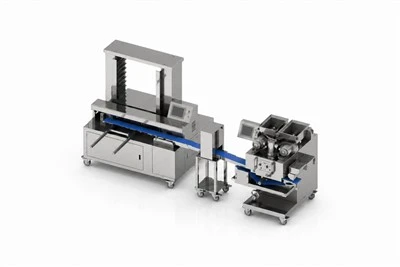
First, let’s get the basics straight. A sausage processing line isn’t just one machine. It’s a whole connected workflow designed to turn raw meat, fat, seasonings, and additives into safe, shelf-stable (or fresh) sausages without cross-contamination, inconsistency, or downtime. Think of it like a well-oiled team, where each step passes the product to the next, no gaps, no mess. I’ve seen so many producers try to piece together random machines and end up with slow lines, wasted meat, or even food safety issues—this is why a dedicated line matters.
Let’s walk through a typical line step by step, because that’s where it actually makes sense. I work with lines customized for everything from 500-pound daily runs for artisanal shops to 50,000-pound shifts for big distributors, so I’ll cover the core parts that are non-negotiable, not the fancy add-ons.
First stop: Raw material prep. You can’t just grab a frozen hunk of pork and toss it into a grinder, right? That’s a fast track to inconsistent texture or even foodborne bacteria issues. A good line starts with a meat mixer or a tumbler? Wait, no—wait, for sausage, first you trim and grind, but actually, many lines kick off with a “meat blender” that combines raw meat cuts, fat, and seasonings evenly. Some use a vacuum tumbler here too—this machine massages the meat, seasonings, and spices under low pressure to pull out proteins that bind the sausage together, so it doesn’t fall apart on the grill. I tell clients all the time: skipping the tumbler might save a buck upfront, but your sausages will crumble when you cook them. That’s a dead giveaway for customers, trust me.
Next, the grinding and emulsifying step. Wait, if you’re making a fine-textured hot dog, you need an emulsifier that turns meat and fat into a smooth paste, but for coarse breakfast sausages, it’s a basic grinder with a fixed plate. A sausage processing line lets you switch between both in minutes—one second you’re cranking out coarse links for a local diner, the next fine paste for hot dogs. That flexibility is huge. I’ve had small producers come to me because their old line could only do one texture, and they lost half their monthly orders from restaurants that wanted two options.
Then the part everyone recognizes: the stuffing machine. This is where that mixed meat gets pushed into casings—natural hog casings, collagen, whatever you’re using. A lot of people think stuffing is just shoving meat into a tube, but modern machines in a good line do it evenly, so every sausage link is the same weight. No one wants a tiny mini sausage and a giant one in the same pack. Most of my lines have automated portioning here too—so the machine twists or cuts the links at exact intervals, like 4 inches for brats, 2 inches for breakfast links. That cuts down on labor because you don’t have someone standing there twisting each one by hand, which is slow and leads to human error.
Wait, what about food safety? That’s a big one for processors. A proper sausage processing line is set up with sanitation in mind every step. For example, after stuffing, there’s often a linking and clipping machine—clips seal the ends so the meat doesn’t leak out during cooking or packaging. Then comes the thermal processing, right? Sausages aren’t safe to eat raw (well, some fresh ones are, but you still need controlled cooking to kill bacteria like salmonella or E. coli). That’s where a smokehouse or a thermal oven connects to the line. Wait, some lines have continuous smoke ovens, so the sausages move through on a conveyor instead of being loaded in batches. Batch ovens work for small runs, but if you’re doing 10,000 sausages an hour, a continuous line is a game-changer. It’s consistent—same smoke level, same internal temperature every single time, no burnt edges or undercooked centers. I’ve had a client tell me their old batch oven had 10% of sausages rejected for uneven cooking, and after switching to a continuous oven in their line, that number dropped to less than 1%. That’s not a small win.
Then comes cooling and packaging. After cooking, you can’t just bag hot sausages—they’ll spoil fast. A cooling tunnel, part of the line, drops the temperature down to safe levels (like 40°F or lower) in a controlled way, so no bacteria grows. Then packaging: vacuum sealing for long shelf life, modified atmosphere packaging (MAP) where you replace the air in the bag with a mix of gases to keep sausages fresh longer, or even bulk packaging for restaurants. A good line integrates packaging machines right after cooling, so there’s no extra handling—less chance of contamination, less labor.
Now, let’s talk about the stuff that makes a sausage processing line not just a line, but a valuable investment. First, automation level. I know some small-batch producers think “automation is only for big guys,” but even semi-automated lines save money. Manual lines are slow, you have to hire extra people, and you waste a lot of meat from inconsistent stuffing or bad portioning. I worked with a 10-person artisanal shop last year that switched from a manual setup to a semi-automated line, and they cut their labor costs by 30% and increased their output by 40% in six months. That’s not a numbers trick—that’s real savings.
Second, flexibility. A line that only makes one type of sausage is useless. What if you want to make chorizo one month, breakfast links the next, and snack sticks for a summer? A good line lets you swap parts quickly—different stuffing plates, different seasoners, different casings—without shutting down for hours. I design every line to be adaptable, because not every producer is making the same product year-round.
Third, sanitation. Meat processing lines have to be cleaned every day, right? So if the machines are hard to take apart, or have crevices where meat and bacteria can hide, that’s a problem. My lines are built with smooth, stainless steel surfaces, no hard-to-reach nooks, and parts that detach in minutes for cleaning. OSHA and FDA have strict rules here, and cutting corners on sanitation parts can get you fined or worse—recalls. I’ve had to walk a client through redoing their line because their old machine had a seam where meat got stuck, and an inspector flagged it. Don’t let that happen to you.
Wait, let’s address a common myth: a sausage processing line is too expensive for small producers. Yeah, a fully automated line for 50,000 lbs a shift is a big investment, but there are mid-sized and semi-automated options for shops that do 500 to 5,000 lbs a day. I don’t push one-size-fits-all lines—every producer’s needs are different. A guy making 500 lbs a day for local farmers markets doesn’t need a $500k line; he needs a $50k semi-automated line that lets him keep up with orders without overspending. That’s why I work with clients to customize lines to their exact volume, products, and budget.
Another thing: maintenance. A line is only as good as how you take care of it. That’s why I include 24/7 support for all my clients, not just a “here’s the machine, good luck” handoff. If a part breaks at 2 a.m. before a big order, you don’t want to wait until Monday for a repair person. I have technicians on call 7 days a week, and stock all common parts so downtime is minimal. I see way too many suppliers sell a machine and disappear, leaving clients stuck with broken equipment. That’s not how I do business.
Let’s circle back to that sausage on your plate. The next time you eat one, think about all those steps—from tumbling meat to clipping links to cooling. A good sausage processing line doesn’t just make product; it makes consistent, safe, profitable product. No crumbly edges, no uneven sizes, no contamination risks, no wasted time or money. It’s the backbone of any successful sausage operation, no matter how big or small.
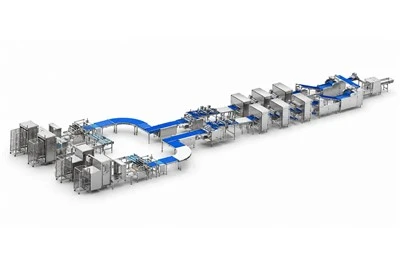
If you’re a meat processor, a startup looking to launch your sausage line, or even an old-timer who’s tired of their line breaking down every other week, let’s talk. I can walk you through what your setup would look like, answer any questions about automation, sanitation, or customization, and help you find a line that fits your needs without breaking the bank. Don’t waste another piece of meat on a setup that doesn’t work for you—let’s make your process smoother, your product better, and your business more profitable. Just reach out to chat about your requirements, and we’ll get something tailored for you.
Cookie Machine References:
- U.S. Food and Drug Administration (FDA). (2022). Food Safety for Meat Processing Facilities: Processing Line Sanitation Guidelines.
- Meat and Poultry Hotline, U.S. Department of Agriculture (USDA). (2021). Sausage Production and Safety Best Practices.
- National Meat Association (NMA). (2023). Small to Medium-Scale Meat Processing Line Design and Optimization.
Shanghai Longyu Electro-Mechanic Technology Co., Ltd.
Shanghai Longyu Electro-Mechanic Technology Co., Ltd. is one of the most professional meat processing lines manufacturers and suppliers in China, featured by quality products and good service. Please feel free to wholesale advanced meat processing lines made in China here from our factory. Also, custom service is available.
Address: No.66, Guangfulin East Road, Zhongshan Subdistrict, Songjiang District, Shanghai, China
E-mail: sales4@longyu-sh.com
WebSite: https://www.longyu-sh.com/
