If you’ve ever stepped into a whisky bar, pulled a stool up to a table with a crystal Glencairn in front of you, and wondered why the pour looks more like a splash than a shot, you’re not alone. As someone who’s spent the last 12 years designing and refining whisky tasting glasses for professionals and home enthusiasts alike, this is one of the most common questions I get—both from customers who buy our glasses and from bartenders who reach out when they’re tweaking their tasting menus. The short answer is that the ideal pour size for a whisky tasting glass isn’t arbitrary; it’s rooted in chemistry, tradition, and the simple fact that whisky is meant to be savored, not chugged. But let’s break this down properly, because there’s a lot more to it than just “a little less than a shot.” Whisky Tasting Glass
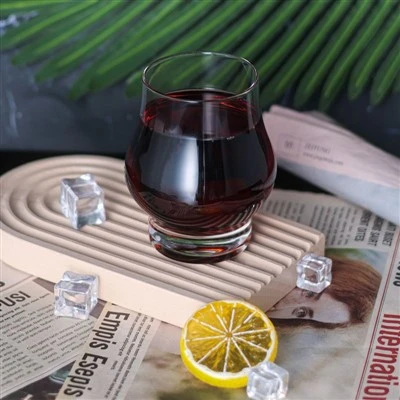
First, let’s get one thing straight: a whisky tasting glass is not the same as a rocks glass or a highball. The entire shape—narrow at the rim, widening at the bowl, a thick base to warm in the palm—is engineered to concentrate whisky’s aromatic compounds, the thing that makes a good whisky great before you even take a sip. If you fill this glass to the brim, or even half-full, you’re defeating that purpose. The volatile compounds that give whisky its specific notes—vanilla from oak, peat smoke, dried fruit, that hint of honey or citrus—are light, and they escape into the air. A wide, full bowl lets them dissipate instantly, so when you lean in to smell, you’re getting mostly alcohol fumes, not the whisky’s true character. That’s where the pour size comes in. The sweet spot is designed to leave enough space for those aromas to collect at the narrow top of the glass, where you can breathe them in fully without overwhelming your senses.
Now, let’s talk numbers, because this isn’t just anecdotal. Most standard whisky tasting glasses—our Glencairn-style glasses, for example, which are the gold standard for professional tastings—have a bowl capacity of about 175 milliliters, or 6 fluid ounces. The recommended pour size? Between 25 and 30 milliliters, or roughly 0.8 to 1 fluid ounce. That’s about a tablespoon and a half to two tablespoons, for anyone who doesn’t work in milliliters. Wait, you might say, that’s tiny. How does that make sense? Let’s do the math: if you pour 25ml into a 175ml bowl, that leaves 150ml of empty space at the top. That’s enough room for the whisky’s aromatic molecules to rise and pool right at the rim. A larger pour would spread those molecules too thin, or if it’s too close to the top, the liquid can seep into the rim when you tilt the glass to smell it, which can dilute the scent with the fumes from your breath.
But why not pour more? There are a few practical reasons, too. First, whisky is expensive. A good single malt can cost $80 or more a bottle, so pouring a 50ml shot (the standard pour for a rocks glass) would cut into a bar’s profit margin fast, and feel like a waste at home when you’re sipping a 12-year Ardbeg. Second, alcohol content: most whiskies are 40% ABV, or higher for cask strength bottlings. Drinking too much too fast defeats the purpose of tasting, which is to pick up on subtle layers of flavor, not just the burn of the spirit. Even for seasoned whisky drinkers, sipping a small pour over 15 to 20 minutes lets your palate adjust, so you can tell the difference between the initial vanilla, the mid-palate of dark chocolate, and the finish of sea salt.
There are exceptions, of course. If you’re drinking a whisky in a highball—mixing it with soda or ginger ale—you’ll use a different glass and a different pour, usually 50ml. But that’s a cocktail serving, not a tasting. The pour size changes when you switch to a Glencairn, a Copita, or another purpose-built tasting glass because the goal shifts from dilution and refreshment to aroma and flavor. I’ve worked with master distillers at Scottish distilleries (yes, the ones who hand-select every cask and taste dozens of whiskies a day) and they all use the same small pour. At a recent tasting I attended at a small distillery in Islay, the distiller told me he once poured a 50ml pour for a group of critics, and half of them complained they couldn’t pick up the peat smoke because it was spread too thin. When he corrected the pour to 25ml, every single critic noted the smoky note clearly. That’s when it clicked for me: the pour size is not just a suggestion, it’s part of the glass’s function.
Let’s also talk about temperature. Whisky tasting is about more than smell and flavor; temperature matters too. When you hold a whisky glass, your palm naturally warms the liquid inside. A small pour heats up faster, which brings out different flavors than a cold pour. If you pour a large amount, the liquid at the bottom of the glass stays cold longer, and the liquid at the top gets too warm, so you get inconsistent flavors with every sip. A 25ml pour is small enough that the heat from your palm is evenly distributed across all the liquid, so when you take a sip, the flavor is uniform from first to last. That’s another key reason the size is what it is. I’ve tested this with our glasses: when I pour 25ml, the entire sip tastes balanced. When I pour 50ml, the first sip is cold and sharp, the last sip is warm and sweet. It’s a small difference, but for anyone paying attention, it’s obvious.
For home enthusiasts, this is where a lot of people go wrong. They buy a fancy tasting glass, then fill it to the point where the liquid is halfway up the bowl, because they’re used to a shot glass. They end up wondering why their whisky doesn’t smell as good as it does at the bar. That’s not the glass’s fault—it’s the pour. I’ve had customers email me saying they love our glasses but they “waste too much whisky” on a small pour. But if you think about it, a 750ml bottle of whisky gives you about 30 tasting pours at 25ml each. That’s a lot more than the 15 shots you’d get from the same bottle, so you’re actually getting more sips to savor, not less. And if you like to add a drop of water to open up a whisky, a small pour is perfect for that. Adding water to a big pour can dilute the entire glass too much, but adding one or two drops to a 25ml pour lets you adjust the flavor without overwhelming it.
Now, let’s address the elephant in the room: cask strength whiskies. These are whiskies bottled straight from the cask, often at 55-60% ABV, and they’re popular with serious collectors. What’s the pour size for those? Even smaller, usually 20ml, or just under a half-fluid ounce. Why? Because they’re much higher in alcohol, so you don’t want to overwhelm your palate. A 20ml pour leaves even more space in the glass, so the aromas are concentrated, and you can take small sips to taste the notes without the burn being too intense. Master distillers often use even smaller pours when tasting cask strength, just a splash, because they’re evaluating the spirit, not drinking for pleasure (though they do enjoy it, of course).
I’ve seen a lot of trends in whisky tasting over the years, from the rise of craft distilleries in the US to the popularity of blended malts. But the pour size for a tasting glass has stayed consistent. It’s not a marketing gimmick from glass makers; it’s a science. The International Whisky Tasting Association, which sets the standards for professional tastings around the world, recommends a 25-30ml pour in a standard tasting glass for official evaluations. That’s not something they made up—they tested different sizes for years, measuring how much aroma is collected, how the flavor develops, and how well the pour works for both new and seasoned drinkers.
As a glass supplier, this is why we design every glass with that 175ml capacity in mind. We don’t make glasses that are too small, because you need enough space for the aromas to pool, and we don’t make glasses that are too big, because a larger bowl would mean the ideal pour is even smaller. Our customers—bars, distilleries, home collectors—all tell us that once they switch to the recommended pour, their whisky tasting experience changes. It’s no longer just drinking alcohol; it’s a sensory experience, where you smell the oak before you taste the vanilla, where the finish lingers on your tongue instead of fading after two seconds.
If you’re new to whisky tasting, don’t be intimidated by the small pour. Start with 25ml in your tasting glass, hold it by the base or the stem (never the bowl, because your hand will warm it too fast), tilt it slightly and smell the rim. You’ll notice a difference immediately. If the aroma is too strong, you can add a drop of water to open it up, or let it sit for a minute. If it’s too faint, maybe you’re pouring a little too much. Experiment a little, because everyone’s palate is different. Some people prefer a 20ml pour, some prefer 30ml, and that’s okay too—these are guidelines, not rules.
For those of you who are bartenders or bar owners, getting the pour right is part of your service. Your customers come to you for a quality experience, not just a drink. I’ve had bar managers tell me that switching to the standard tasting pour and educating their customers on why it works has increased their whisky sales, because people are more likely to order another pour when they actually enjoy the one they had, instead of feeling like they wasted money on a small glass. For home collectors, it’s a small detail that makes a big difference. A $50 tasting glass paired with a $80 bottle of whisky and a 25ml pour will give you a far better experience than a rocks glass half-full of whisky and soda.
At the end of the day, whisky is one of the few spirits that’s meant to be tasted, not just consumed. The pour size in a tasting glass is a fundamental part of that. It’s not about being pretentious or following old traditions for the sake of it; it’s about getting the most out of every drop, of picking up the subtle notes that make each whisky unique. If you’ve never tried a proper tasting pour, I encourage you to grab your best whisky, your purpose-built tasting glass, and measure out 25ml the next time you sit down to enjoy it. I promise you’ll notice the difference.

If you’re a bar owner, distillery, or home enthusiast looking for high-quality whisky tasting glasses designed to work perfectly with that ideal 25-30ml pour, feel free to reach out to our team to discuss bulk orders, custom designs, or recommendations for different types of whiskies. We’re always happy to help you get the most out of your whisky tasting experience.
Specialty Shaped Glass References
International Whisky Tasting Association. (2022). Official Standards for Professional Whisky Tastings.
MacLean, C. (2019). The Science of Whisky: A Guide to Aromas, Flavors, and Production. Edinburgh University Press.
Scottish Whisky Distillers Association. (2021). Tasting Best Practices for Single Malt Scotch.
Craft Distillers of America. (2023). Home Tasting Guidelines for American Whiskies.
Nexus Household Co., Ltd.
As one of the most experienced whisky tasting glass manufacturers and suppliers in China, we also support custom service. Please feel free to wholesale high quality whisky tasting glass for sale here from our factory. For free sample, contact us now.
Address: Room0101, 1st Floor, Unit 3, Building 3005, No. 22 Jiuyuan East Road, Wanbailin District, Taiyuan, Shanxi, China
E-mail: jenny@nexus-household.com
WebSite: https://www.nexus-household.com/
