If you’ve ever browsed drilling equipment, you’ve probably stumbled on DTH hammers—those rugged, under-the-surface workhorses that power everything from water well drilling to mining blast holes. But here’s the question that still throws a lot of new drillers (and even some old heads) off: What’s the actual frequency of a DTH hammer? I get this question at least once a week from guys just starting out, or even seasoned drillers trying to tweak their setup for harder rock. As a DTH hammer supplier, I’m not just here to sell you a part—I’m here to break this down like we’re grabbing a coffee after a long day on the rig. DTH Hammer

First, let’s get the basics straight: DTH stands for Down-the-Hole, and unlike top-hammer drills that sit on the surface pounding the rod, DTH hammers live inside the drill string. They rely on compressed air to drive a piston inside, which slams the bit against rock, one hit after another. That rhythmic slam is the frequency—but it’s not a one-size-fits-all number. It shifts based on three big factors: the hammer’s size, the air pressure you feed it, and the type of rock you’re drilling through.
Let’s start with hammer size, because that’s the biggest starting point. I stock hammers that range from 3-inch models for small residential water wells to 12-inch monsters for mining and large foundation drilling. A tiny 3-inch hammer? It runs fast—like, 1,200 to 1,800 blows per minute (BPM). Why? Smaller pistons move quicker, right? They don’t have to push a ton of mass, so they can cycle fast to keep up with shallow, soft-to-medium rock. But a big 12-inch mining hammer? That’s a heavy-duty beast. Its piston is massive—you’re talking pounds of metal moving back and forth—and it doesn’t need to slam as often to generate the force to break granite or hard basalt. Those run way slower, usually between 400 and 800 BPM. I’ve had a customer switch from a 6-inch hammer to a 9-inch for a limestone project, and he noticed instantly: his BPM dropped from 1,000 to 650, but his penetration rate went up because each hit packed more punch. That’s the trade-off right there.
Next, air pressure—this is where a lot of drillers mess up, honestly. If you’re feeding your hammer too little air, it’ll bog down, and the frequency will drop way below what it’s rated for. If you overpressurize it, you’re wasting money on compressor fuel, and you might even wear out the piston faster. Most standard DTH hammers are designed to run at 100 to 150 PSI, but high-pressure models (for hard rock) can go up to 250 PSI. Let’s take a 6-inch hammer: at 100 PSI, it’ll hover around 1,000 BPM. Crank that to 150 PSI, and you’ll see it jump to 1,200 BPM—if the compressor is big enough to keep up. I once had a driller come to me upset because his hammer was “slow.” Turns out his 185 CFM compressor was too small for his 6-inch hammer, which needed 250 CFM at full pressure. He was only getting 80 PSI, so his frequency dropped to 700 BPM. Once he upgraded his compressor, he got his BPM back, and his drilling time cut by a third. That’s a super common mistake—guys think more power is just higher pressure, but it’s matching the compressor to the hammer’s needs that gets you the right frequency.
Then there’s the rock type, which is the variable most people forget about. Soft rock, like sandstone or loose gravel? The hammer doesn’t need to hit super hard, so you can run a higher frequency. A 4-inch hammer in sandstone might hit 1,500 BPM no problem. But hard rock—granite, gneiss, hard limestone? You need slower, harder hits. If you crank the frequency too high here, the bit doesn’t have time to break the rock between hits, and you’ll just wear out your bit faster, or even stall the hammer. I had a mining customer try running his 10-inch hammer at 1,000 BPM on granite, and his bit lasted 100 feet before it was toast. When he dropped to 600 BPM, his bit life jumped to 350 feet, and his penetration rate stayed the same because each hit was more effective. That’s the sweet spot—adjusting frequency to the rock, not just the hammer’s max.
Wait, but what about “standard frequencies” you see online? A lot of manufacturers will list a single number, like 1,000 BPM for a 6-inch hammer. But that’s just a baseline, right? I always tell customers: don’t rely on the manufacturer’s spec as your end number. Test it on your first drill run. If you’re in soft dirt, run the compressor at the top end of its range, see if you can push the frequency up a little—you’ll drill faster. If you hit hard rock, dial the pressure back a bit, let the hammer slow down, and you’ll save on parts.
Another thing I’ve noticed over the years: the environment matters too. If you’re drilling in dusty, high-humidity areas, the hammer’s internal parts can get a little gunked up, which slows the piston down. That might drop your frequency by 100 or 200 BPM, so you’ll need to do more regular maintenance—blowing out the hammer, checking the O-rings—keep it running at the right speed. I always include a little maintenance guide with every hammer I sell, because a well-lubricated, clean hammer is a consistent frequency. A neglected one? It’ll act finicky, and you’ll blame the hammer instead of the lack of oil changes.
Let’s also clear up a myth I hear all the time: more frequency = better drilling. Nope. That’s like thinking a fast, tiny hammer will work for a nail gun vs a sledgehammer. The sledge (bigger hammer, lower frequency) hits harder, drives the nail further. The nail gun (smaller hammer, higher frequency) hits fast, great for small jobs. Same with DTH. If you’re drilling a shallow water well in sand, fast frequency is perfect. If you’re drilling a blast hole in granite, slow, powerful hits are king. I’ve had customers come back saying they tried a higher frequency hammer for their job, and it was a disaster—they didn’t match the size to the rock, so they wasted money on a hammer that was too small, too fast.
So, to wrap this up: the frequency of a DTH hammer isn’t a fixed number. It ranges from 400 BPM (for big, hard-rock mining hammers) to 1,800 BPM (for small, shallow well hammers). But to get the right frequency for your job, you need to match three things: hammer size to your rock type, compressor CFM/PSI to the hammer’s requirements, and adjust on the fly based on what’s happening downhole.
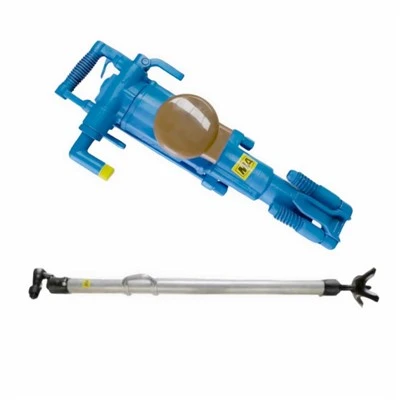
If you’re in the market for a DTH hammer and still not sure what frequency you need, or if your current setup is acting wonky (slower than normal, bits wearing out fast), hit me up. I don’t do hard sell—let’s talk about your project, the rock you’re drilling, the compressor you have, and I’ll point you to the right hammer for your needs. No jargon, no pressure, just actual info from someone who’s been on rigs and sold hammers for years.
DTH Drilling Tools References:
- Atlas Copco. (2021). DTH Hammer Technology Handbook. Atlas Copco Construction and Mining Technique.
- International Association of Drilling Contractors (IADC). (2022). Down-the-Hole Drilling Best Practices Guide. IADC.
- Sandvik Mining and Rock Solutions. (2020). DTH Hammer Performance and Application Manual. Sandvik AB.
- U.S. Department of the Interior, Bureau of Reclamation. (2019). Water Well Drilling Equipment Specifications: DTH Hammers. U.S. Government Printing Office.
Super Rock Machinery Equipment (Qingdao) Co., Ltd.
We are one of the most professional DTH hammer manufacturers and suppliers in China, featured by quality products and good price. Please feel free to buy advanced DTH hammer for sale here from our factory. Welcome to view our website for more information.
Address: No. 45, Pengwan Road, Qianwan Bonded Port Area, Qingdao Sub-district, Free Trade Pilot Zone, Shandong China
E-mail: sales@superrocktools.com
WebSite: https://www.superrocktools.com/
