Hey there, if you’ve ever sourced PVC steel wire hoses for industrial use, agriculture, or even DIY projects, you’ve probably stumbled on this question way more times than you expected: “What’s the outer diameter of a standard PVC steel wire hose?” I get it—when you’re ordering a hose that’s meant to move water, chemicals, or even bulk materials, one wrong dimension can throw off your entire setup. That’s exactly why I’m writing this as a supplier who’s been in the game for years, not some random textbook article with stiff jargon. No fluff, just real stuff I’ve learned from answering this question a hundred times for customers big and small. PVC Steel Wire Hose
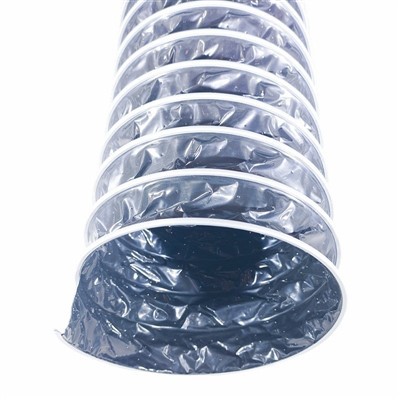
First off, let’s get something straight: “standard PVC steel wire hose” isn’t one single thing. A lot of people think all these hoses are the same size, but they’re not. The outer diameter (OD) depends on what the hose is designed to do, right? Like, a hose for a residential lawn sprinkler is way different from one that runs on a chemical processing line. So let’s break this down by the most common types you’ll actually encounter, no fancy niche stuff that only aerospace would use.
Let’s start with the most popular standard sizes: 1-inch, 1.5-inch, 2-inch, and 3-inch. Wait, but hold on—when I say 1-inch, that’s usually the inner diameter (ID) people reference, right? Because the ID is what matches your fittings, pipes, or pumps. But the OD matters just as much. The steel wire helix inside the hose wall adds thickness, so the OD is always bigger than the ID. That’s a key point a lot of new buyers mix up. For example, a 1-inch ID standard PVC steel wire hose—what’s its OD? From what I’ve measured and what industry specs agree on, that’s usually around 1.25 inches to 1.3 inches. I’ve seen tiny variations here depending on the hose’s wall thickness, which ties to its pressure rating. Thicker walls for higher pressure mean bigger OD. Makes sense, right? More material (and more steel wire) around the inside makes the whole hose wider.
Next, 1.5-inch ID, which is super common for agricultural irrigation, water transfer, and even some light industrial applications. That one’s OD is usually between 1.75 inches and 1.85 inches. I remember a guy a few months back ordered 1.5-inch ID hoses and tried to use his existing clamps meant for 1.75-inch OD—they were way too loose, so we had to explain that mix-up. That’s why getting the OD right is non-negotiable for fittings, clamps, even routing around pipes. Too small and the hose slips off; too big and you can’t get your clamp tight enough, leading to leaks that cost you time and money.
Then 2-inch ID, which is workhorse for a lot of commercial jobs—running water to construction sites, moving bulk materials like grain or pellets, or venting exhaust fumes. The OD here is around 2.25 inches to 2.35 inches. I’ve noticed that some budget hoses (the cheap ones that fall apart fast) might have thinner walls, so their OD is a little smaller, but we don’t carry those. Our hoses are built to last, so we stick to the standard OD ranges that hold up under pressure and frequent use. And don’t get me started on 3-inch ID—those are for heavy-duty stuff, like large scale agriculture or industrial fluid transfer. Their OD is roughly 3.25 inches to 3.4 inches. When you’re dealing with that big of a hose, even a tiny difference in OD can affect how it connects to bulk valves or transfer systems, so we make sure ours hit that sweet spot.
Wait, what about smaller sizes? Like ¾-inch ID? A lot of people don’t realize that’s a standard size too for smaller water lines, car wash setups, or small construction tools. That ¾-inch ID hose has an OD of about 1 inch to 1.05 inches. I’ve had a few DIY customers come to me saying they bought a “1-inch hose” but their fitting didn’t fit—turns out they were looking at OD instead of ID, and the mix-up cost them an extra day of work. That’s why I always make a point to clarify: when we list sizes on our site, we note both ID and OD, because too many folks mix those two up.
Now, let’s talk about why the OD isn’t set in stone for every hose. The biggest factor is the hose’s working pressure. Higher pressure hoses need a thicker steel wire reinforcement, right? That means the wall is wider, so the OD goes up. For example, a standard 1-inch ID hose rated for 100 PSI will have an OD around 1.25 inches, but the same 1-inch ID hose rated for 150 PSI might be 1.3 inches OD. More steel wire to hold back higher pressure equals a thicker wall. Then there’s the material of the PVC itself. Some hoses are made with rigid PVC for heavy duty, others are flexible PVC for easy routing. Flexible PVC might have a slightly thinner wall (but still enough steel wire) so its OD is a little smaller than a rigid one of the same ID. It’s all about balancing flexibility, pressure, and durability for the job.
I should also mention that there’s a thing called “metric standard” hoses, which are used a lot in international markets. A lot of buyers overseas don’t use inches, they use millimeters. So for a 25 mm ID standard PVC steel wire hose (that’s the metric version of the 1-inch ID), the OD is around 32 mm, give or take a couple mm. Our company caters to both imperial and metric needs, so we list dimensions in both units to avoid any confusion. That’s a common headache for international customers—getting units mixed up, so we make sure that’s never an issue.
Now, let’s talk about common mistakes I see buyers make when checking OD. First, they just measure the outside with a tape measure, but if the hose is kinked or not fully expanded, that measurement is wrong. You have to make sure the hose is pressurized (or at least unkinked, full length) before measuring OD. I’ve had a guy once measure a coiled hose, got a 1.1-inch OD instead of the correct 1.25 inches, and ordered clamps that were way too small—total waste of time and money. Second, they forget about the steel wire. If you have a hose that’s not steel wire reinforced (just plain PVC), its OD is way smaller for the same ID. Steel wire hoses have that helix inside that adds to the wall thickness, so that’s a big difference. Don’t mix plain PVC hoses with steel wire reinforced ones—their OD specs aren’t the same.
Why does the OD matter so much anyway? It’s not just about fittings. If you’re running hoses through trenches, routing them around existing pipes, or storing them, the OD determines how much space they take up. If you have a tight spot, a smaller OD hose is better. But if you need that extra wall thickness for pressure, you have to factor in the bigger OD. Also, when you’re connecting hoses end to end, like with a coupling, the coupling size has to match the OD. If your hose is too big or too small for the coupling, it won’t seal right, leading to leaks. I’ve seen leaks that could have been avoided if someone just checked the OD before ordering.
Wait, what about custom sizes? A lot of people ask, “Can you make a standard hose with a custom OD?” Sure, we do that for specific jobs, but the standard ones are the ones I listed earlier. The standard OD ranges are set by industry organizations, like the Rubber Manufacturers Association (RMA) in the US, which sets guidelines for hose dimensions. That way, fittings, clamps, and other accessories are made to fit these standard sizes, so you don’t have to hunt for special parts every time. If everyone used custom OD sizes, the supply chain would be a nightmare—buyers would pay more for parts, lead times would be longer, and no one would get the right fit.
I’ve been selling PVC steel wire hoses for 7 years now, and the number one question after “what size do I need?” is “what’s the OD?” It’s not a complicated question, but it’s one that has to be answered with context. You can’t just say “1.25 inches” without saying it’s for a 1-inch ID hose, or that it’s for a 100 PSI pressure rating. That’s why we make a point on our product pages to list every spec: ID, OD, pressure rating, material, even the type of steel wire. No hidden stuff, no vague numbers.
If you’re shopping for these hoses, don’t just go by the size name. Always check the OD and ID. If you’re not sure, send us a message—we’ll help you figure out exactly what you need. Whether you’re a small farmer needing a few hoses for irrigation, a construction company stocking up for a big job, or someone working on a DIY project, getting the right OD saves you time, money, and headaches down the line. A wrong fitting, a leak, a hose that doesn’t fit your existing setup—all that can be avoided with one quick check of the outer diameter.
Look, I get it, sourcing hoses can be overwhelming. There are a lot of suppliers out there cutting corners on material, using thin walls or cheap steel wire that breaks under pressure. That’s why we stick to the standard specs, including the right OD for every size, so our hoses hold up. We’ve tested ours thousands of times, and we never once had a customer say “the OD was too small or too big” for a standard application. That’s the kind of reliability we offer.
So, to wrap this up: the outer diameter of a standard PVC steel wire hose isn’t a single number—it depends on the inner diameter, pressure rating, and material, but the standard ranges are roughly: ¾-inch ID = 1–1.05 inches OD; 1-inch ID = 1.25–1.3 inches OD; 1.5-inch ID = 1.75–1.85 inches OD; 2-inch ID = 2.25–2.35 inches OD; 3-inch ID = 3.25–3.4 inches OD. For metric buyers, that translates to 25 mm ID = ~32 mm OD, 40 mm ID = ~48 mm OD, and so on. Always make sure to measure unkinked hoses, confirm ID vs OD, and match to your fittings.
If you’re ready to order, or just have more questions about which size or OD is right for your project, don’t hesitate to reach out. We’re here to help you get the right hose, the first time, no hassle.
Insulated Air Duct References
ASTM International. Standard Specification for Rubber and Plastic Hoses.
Rubber Manufacturers Association. Hose Dimension Guidelines.
Industrial Hose Association. Common Hose Size Specifications.
Dongyang Hstube Co., Ltd.
As one of the leading PVC steel wire hose manufacturers and suppliers in China, we warmly welcome you to wholesale cheap PVC steel wire hose for sale here from our factory. If you have any enquiry about free sample, please feel free to email us. Quality products and reasonable price are available.
Address: NO.5 CHENGDONG ECOLOGICAL INDUSTRIAL ZONE, DONGYANG, ZHEJIANG, CHINA.
E-mail: sales@hstube.com
WebSite: https://www.ductword.com/
