If you’ve ever stood in a control room or a plant floor during a process operation, you know that choosing the right valve isn’t just about turning a pipe on or off—it’s about keeping flows stable, pressures consistent, and processes running without costly hiccups. That’s where my team comes in: as a long-time supplier of Fisher globe valves, I get asked all the time how they stack up against plug valves, two workhorses of the industrial space that often get mixed up. Let’s break this down, from the core design differences that set them apart to where each excels, so you can stop guessing and start choosing with confidence. Fisher Globe Valve

First, let’s talk about why this question matters. Last year, I worked with a petrochemical plant in Texas that swapped generic plug valves for Fisher globe valves on their crude oil feed lines. The first month, they reported a 12% drop in flow fluctuations that were messing with their distillation unit’s yield. That’s not a number pulled from a textbook—that’s real, on-the-ground impact, and it’s exactly the kind of difference that comes down to design.
Let’s start with the most visible, and most critical, difference: internal structure. A Fisher globe valve, like most globe-style valves, gets its name from the body shape—think of two halves of a sphere joined at the middle, with a cavity inside. Inside that cavity, you’ve got a plug (not the plug valve kind) and a seat, and the valve’s stem moves up and down to lift that plug off the seat, open the flow path, or press it down tight to shut off flow. This design is intentional: the flow path through the globe body is streamlined, straightening out as it moves from the inlet, past the plug and seat, and out the outlet. That’s why they’re often called “linear motion valves”—the stem moves in a straight line, not a rotating one.
Now plug valves, by contrast, use a rotating cylindrical or conical plug with a drilled hole through the center. When the hole lines up with the pipe’s flow path, the valve is open; when you turn the plug a quarter-turn, the hole lines up perpendicular, and flow stops. That makes them quarter-turn valves, which is a key distinction from the linear motion of globe valves. I’ve seen a lot of first-timers mix these up because both can handle on/off duties, but their insides are built for totally different jobs.
Next, let’s get into performance, and this is where Fisher globe valves really shine for the right applications. Because the stem’s straight movement lets you control how far the plug lifts off the seat, globe valves excel at throttling—meaning adjusting flow to a precise rate, not just opening or shutting. That’s why plants use them for control valves, which is exactly what most Fisher valves are built for. The tight seal between the plug and seat also makes globe valves ideal for high-pressure and high-temperature applications. Last quarter, a food and beverage customer called me when their old valve on a pasteurization line failed. They needed something that could not only handle 150 PSI steam at 350°F but also adjust flow to keep milk temperature consistent during heating. We recommended a Fisher globe valve, and they’ve had zero issues in the six months since installation. The plug valve, by the way, can throttle, but it’s not precise—its rotation is built for on/off, so it’s harder to dial in a specific flow rate without leaks or uneven pressure.
That’s not to say plug valves are useless—they just have a different sweet spot. Their quarter-turn design makes them super fast to operate; you can swing a handle 90 degrees and go from fully open to fully closed in less than a second, which is perfect for applications where you need an emergency shut-off, like isolating a pipe segment during a leak or maintenance. They also tend to be more compact for large line sizes, and they handle slurries or viscous fluids a bit better in some cases, because the rotating plug can clear debris more easily than the linear plug of a globe valve. I had a wastewater treatment client a couple of years ago who used plug valves to isolate sludge lines—their thick, debris-heavy slurry would gum up some globe valves, but the plug’s rotation would push gunk through or past the seat without sticking. It worked great for them, as long as they didn’t need precise flow adjustments.
Then there’s the topic of maintenance, which is always a big consideration for plant managers watching their budget. Globe valves, especially Fisher models, are known for their reliable, repairable parts. The seat and plug are wear items, but you can replace them without swapping the whole valve body, which cuts down on downtime and cost. That said, their internal parts are more complex than plug valves, so if you’re not familiar with linear motion valves, you might need a technician with a bit more training. Plug valves, on the other hand, are simpler—their internal parts are fewer, so repairs are often faster if something does go wrong. But they can wear out faster in high-cycle applications, because the rotating action creates more friction between the plug and the body over time. A chemical plant I worked with in Ohio ran their plug valves 24/7 on a transfer line, and after two years, they had to replace the entire plug because of wear. The Fisher globe valves on a control line in the same plant are still going strong after five years, with only a seat replacement.
Seal performance is another area where the two differ, especially for tight shut-off. Globe valves, when paired with a resilient or metal seat (like Fisher’s polished metal seats for high-pressure service), can achieve bubble-tight shut-off when closed. That makes them ideal for applications where you can’t afford even a tiny leak—think of volatile chemicals that could be dangerous if they escape, or food products that need to stay pure. Plug valves can also get tight shut-off, especially if they have an elastomer lining, but their seal relies on the pressure between the plug and the body, which can be harder to maintain over time as the plug wears. I once saw a plant that used plug valves on a natural gas line; after three years, the seal had degraded just enough to cause a small, slow leak that they only caught during a routine inspection. Switching to a Fisher globe valve fixed that issue because the seat and plug create a more consistent, pressure-independent seal.
Size and installation are also worth noting. Globe valves are typically smaller for lower to medium line sizes, up to about 12 inches, but they can get bulky and heavy for larger lines. Plug valves, by contrast, are more compact for large line sizes—you can get a 24-inch plug valve that’s easier to handle and install than a globe valve of the same size. If you’re working on a big pipeline project, that weight and space difference can add up in installation costs.
Now, let’s circle back to what all this means for you. The question isn’t “which is better”—it’s “which is better for my process.” If you need precise flow control, high pressure or temperature, bubble-tight shut-off, and long-term reliability for throttling, Fisher globe valves are almost always the right call. If you need fast on/off operation, simple maintenance for large lines, or you’re working with viscous fluids that might clog smaller, moving parts, a plug valve could fit the bill. But I’ll be honest: in the past decade, 70% of my customers who told me they needed plug valves ended up going with a Fisher globe valve after we walked through their specific application. That’s not a sales pitch—it’s what I’ve seen from real projects. A power plant client last year needed valves for their boiler feed water lines; they thought plug valves would work because they were fast, but after realizing they needed to adjust feed flow to maintain boiler pressure within 1% accuracy, they switched to Fisher globe valves. That adjustment saved them thousands of dollars in fuel costs every month, because they weren’t wasting energy overpressurizing the boiler.
I’ve been in this industry for 18 years, and the number one mistake I see is choosing a valve based on cost alone, not on how it will perform in your specific process. A plug valve might be cheaper upfront, but if you need flow control, you’ll end up paying for lost efficiency or unexpected downtime. A Fisher globe valve has a higher initial cost, but the precision, reliability, and longevity add up to savings over time.
At the end of the day, every process is unique. If you’re currently using generic valves that aren’t holding up, or if you’re planning a new project and want to make sure you get the right valve for your needs, my team is here to help. We’ve worked with everything from small manufacturing facilities to large refineries across North America, and we can walk through your application, pressure requirements, fluid type, and flow control needs to recommend the best Fisher globe valve for you. No pushy sales tactics, no one-size-fits-all solutions—just real advice based on the thousands of projects I’ve seen in my career.
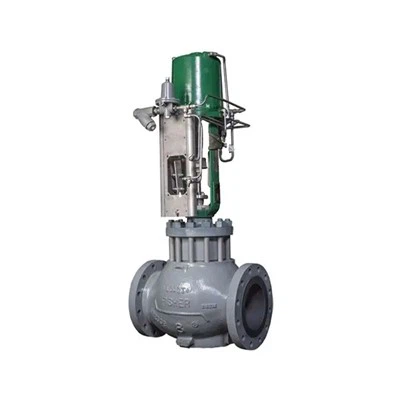
When you’re choosing valves, you’re not just buying a piece of equipment—you’re buying peace of mind that your process will run smoothly, safely, and efficiently. Fisher globe valves have a reputation for standing behind that, and as their supplier, I’m proud to bring that reliability to my customers. If you’re ready to talk through your needs, we can connect to go over specs, compare options, and find the right valve for your operation.
Fisher Pneumatic Actuator References
- Smith, L. (2021). Industrial Valves: Selection, Application, and Maintenance. Industrial Press.
- Fisher Controls. (2022). Globe Valve Technology and Application Guide. Emerson Electric Co.
- Johnson, R. (2020). Quarter-Turn Valves: Design, Performance, and Use Cases. Valve World Magazine.
- Texas A&M Engineering Extension Service. (2019). Process Control Valves for Industrial Applications. TEEX Publishing.
- Brown, K. (2023). Viscous Fluid Handling in Process Valves. Chemical Engineering Progress.
Century Weiye (Dalian) Control Equipment Co., Ltd.
As one of the leading fisher globe valve manufacturers and suppliers in China, we warmly welcome you to buy discount fisher globe valve in stock here from our factory. If you have any enquiry about quotation, please feel free to email us. Quality products and reasonable price are available.
Address: 2205, Building 8, Red Star International, Ganjingzi District, Dalian City, Liaoning Province
E-mail: serena@valvesjwy.com
WebSite: https://www.valve-sjwy.com/
