Hey folks, let’s cut to the chase—if you’ve ever shopped for surge protective devices (SPDs), you’ve probably stumbled over a million specs, and the one question I get more than any other from electricians, system integrators, and facility managers is: “What’s the actual physical size of that T1+T2 7KA SPD you’re selling?” Let’s be real, no one wants to waste time ordering a device that doesn’t fit their panel, racks, or existing wiring plan. I’m the lead sales rep for a company that makes these exact units, and I’ve answered this question so many times I’ve basically memorized the spec sheets, so let’s break this down like we’re chatting over a coffee (no stuffy jargon, promise). T1+T2 7KA Surge Protective Device
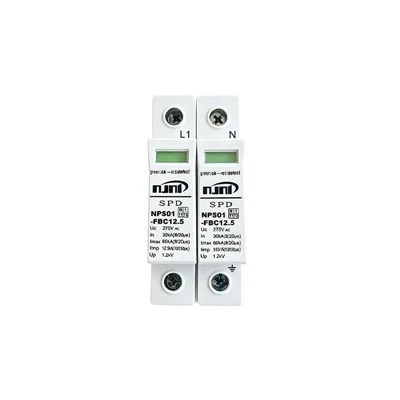
First, let’s get the basics straight for anyone who might be new here: a T1+T2 7KA SPD is a two-stage surge protector, right? T1 is for the big, nasty surges that come from things like direct lightning strikes or utility grid switching, and T2 takes care of the smaller, secondary surges that mess with your sensitive gear like servers, PLCs, or medical equipment. The 7KA rating? That’s the current it can handle per phase (at 8/20µs, which is the standard test waveform for surge devices) before kicking in to protect your system. Now, size is what you’re here for, so let’s not beat around the bush.
Most T1+T2 7KA SPDs—including the ones we manufacture—are designed to fit into standard industrial or commercial electrical panels, which means they follow a DIN rail mount system. If you’re an electrician, you know DIN rails; they’re that thin metal track inside panels that switches, breakers, and other control gear clip onto. The width of these rails is standardized, so SPDs for them are measured in “modules” (each module is 17.5mm wide, for the non-electricians out there). Our T1+T2 7KA unit is 4 modules wide. Let me translate that into inches or feet, because modules don’t mean much to regular folks: 4 x 17.5mm = 70mm, which is about 2.75 inches (or roughly the width of a standard iPhone 15, for reference). Height? It’s 100mm, or about 3.9 inches—way shorter than most circuit breakers, which usually sit around 130mm tall. Depth is where people sometimes mess up: it’s 85mm, so around 3.35 inches. That’s super important because you don’t want a device that sticks out too far from the DIN rail and gets in the way of wiring or other components in your panel.
Wait, hold on—before you go “oh, that’s small, easy to fit,” there are a couple of things to clarify. First, not all T1+T2 7KA SPDs are the same. Some cheaper, off-brand units might cram the same rating into a smaller module count, but that usually means they cut corners on internal components—like using thinner metal for the surge chambers or lower-grade varistors (the parts that absorb surges) which can fail faster, especially in outdoor or high-humidity environments. The size we list (4 modules, 70mm wide) is for our UL-listed, IEC-compliant unit, which is tested to actually handle that 7KA per phase over its entire lifespan. We don’t do “shrinkflation” on SPDs, so if our spec sheet says 4 modules, that’s exactly what you get—no hidden bulk that makes it not fit.
Another thing: when we say “physical size,” people often forget to ask about clearance. The T1+T2 7KA SPD needs a little breathing room on either side, right? We recommend 1 module (17.5mm) of empty DIN rail space next to it for ventilation, because these devices get warm when they’re absorbing big surges (and if they overheat, they can trip a thermal cutout to prevent fires). So even though the unit itself is 4 modules, you need to count that extra 1 module on each side when planning your panel layout. That’s a common mistake we see—electricians try to cram it into a tight spot, and then it overheats during a test surge. Trust me, 10mm on either side isn’t a big deal, but skipping that can lead to headaches down the line.
Now, who uses our T1+T2 7KA SPD, and why does size matter to them the most? Let’s take industrial facilities, for example—factories have panels packed with motor control centers, PLCs, and other critical automation gear that can’t go down for even an hour. These panels often have limited space, so being able to fit a 4-module SPD (instead of a bigger 6-module unit) is a huge win because it means they don’t have to rearrange existing breakers, which saves them time and money on installation. We also sell a lot to renewable energy sites—solar inverters and wind turbine controls need surge protection that’s compact enough to fit into the small inverters and combiner boxes, and our unit’s 85mm depth is perfect for that, since a lot of those boxes only have 90mm of internal space. Outdoor applications, like parking lot light controllers or cell tower base stations, also care about size—their enclosures are tight, so a smaller, slimmer SPD is easier to mount without modifying the box.
Wait, let’s address a common question we get: is there a difference in size between single-phase and three-phase versions of this T1+T2 7KA SPD? Yes, actually. The single-phase unit is 4 modules, which is what I mentioned earlier. The three-phase unit (which has three poles plus a neutral) is 6 modules wide. Let’s do the math on that: 6 x 17.5mm = 105mm, or about 4.13 inches wide. Same height (100mm) and same depth (85mm) as the single-phase. That makes sense, right? More poles mean more surge chambers, so you need a little more width, but we still kept it compact enough to fit in most standard three-phase panel bays. I’ve had a lot of three-phase clients tell us they were stuck with old, bulky SPDs that took up half a panel bay, and our 6-module unit is way easier to install alongside their existing breakers.
Now, let’s talk about how we design the size. We’re not just sticking parts into a box randomly—we did years of testing with panel installers to figure out the sweet spot. We wanted something that was compact enough to save space, but not so small that we had to skimp on the 7KA rating. Too small, and the internal surge components would overheat or degrade faster. Too big, and it’s a waste of space and material. The 4-module (single-phase) and 6-module (three-phase) size is exactly that sweet spot. We also made the depth 85mm instead of the more common 100mm because most panels have wiring that runs along the back, so a slimmer depth means you don’t have to bend or trim wires too much when installing. That’s a tiny detail, but it makes installation way faster—our install partners tell us they cut 10-15 minutes off each job just because of the smaller depth.
I know a lot of you are probably comparing sizes to other SPDs you’ve used. Let’s put it in context: a standard 1-phase, 20KA T2-only SPD is usually 2 modules wide, right? Our T1+T2 7KA is only 2 modules wider, and it adds T1 protection, which is the kind that stops direct lightning surges. That’s a no-brainer—adding extra protection for just a little bit of extra width is worth it for anyone who’s had a surge take out their equipment. We’ve had clients come back to us after a lightning storm saying our SPD saved their PLCs, and a lot of them told us they were worried the bigger T1 units wouldn’t fit their panels. Our size solves that problem.
Another thing to note: the physical size also includes the terminals. The wire terminals on our T1+T2 7KA SPD are designed for 14 AWG to 4 AWG wires, which is standard for commercial and industrial applications. The terminals are located on the top and bottom of the unit, so you don’t have to run wires around the sides, which saves even more space in the panel. That’s another little design choice we made that affects how much total space the unit takes up—no extra wires hanging off the sides that make it look bigger than it is.
Wait, let’s make sure we’re not missing anything. What about wall-mount options? Our T1+T2 7KA SPD isn’t just for DIN rail—we also have a optional wall-mount bracket that fits the same size, so you can mount it directly to a wall or in a small enclosure if you don’t have a DIN rail available. The bracket is compact too, so it doesn’t add any extra bulk. That’s great for smaller projects, like retail stores or remote equipment sheds, where panels might not be an option.
Now, why does the actual physical size matter more than just the number of modules? Because I’ve seen too many installers order a “4-module T1+T2 7KA SPD” from a random supplier, get it, and realize it’s way deeper or taller than expected, which means they have to return it, wait for a new one, and lose time on their project. That’s why we post the exact dimensions on our site—4 modules (70mm W x 100mm H x 85mm D) for single-phase, 6 modules (105mm W x 100mm H x 85mm D) for three-phase—no vague “compact size” or “fits standard panels” language. We put the numbers there so you can measure your panel or enclosure before ordering, which saves everyone time and frustration.
At the end of the day, as a supplier, our job isn’t just to sell a surge protector—it’s to sell one that works for your setup, and size is a huge part of that. We know how valuable your time and equipment are, so we designed this T1+T2 7KA SPD to be small enough to fit almost anywhere, but tough enough to handle the surges that would otherwise cost you thousands in downtime. If you’re planning a project, whether it’s a new industrial panel, a solar farm, or upgrading your cell tower’s surge protection, and you want to confirm if this size works for your space, don’t hesitate to reach out to our team. We can send over CAD drawings, compare it to your panel specs, and answer any other questions you have—no sales pitch, just straight talk, like we talked about earlier. We’re here to make this easy for you, because we’ve all been there when an order goes wrong and it costs you money.
Before I wrap this up, let’s recap the size so you don’t have to scroll back: single-phase T1+T2 7KA SPD = 4 DIN modules (70mm wide, ~2.75in), 100mm tall (~3.9in), 85mm deep (~3.35in). Three-phase version = 6 DIN modules (105mm wide, ~4.13in), same height and depth. That’s it. No hidden bulk, no extra space needed beyond a little ventilation on the sides.
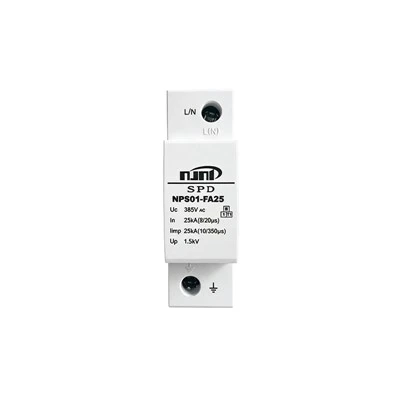
If you’re ready to order, need sample units to test, or just have more questions about fit or specs, get in touch with our procurement team. We can provide all the docs you need, and we’ll make sure you get the right unit for your project, no headaches. We’ve been working with installers and facility managers for years, and we know size is make-or-break for a lot of jobs, so we make sure our specs are clear and our units are designed to fit where others can’t.
T1 25KA Surge Protective Device References:
- International Electrotechnical Commission (IEC) 61643-11: Low-voltage surge protective devices – Part 11: Surge protective devices connected to low-voltage power systems – Requirements and test methods
- Underwriters Laboratories (UL) 1449: Standard for Safety for Surge Protective Devices
- National Electrical Manufacturers Association (NEMA) PB 2: Standard for Industrial Control and Panelboard Wiring Devices and Equipment Enclosures
Nanjing Ningpu Lightning Protection Equipment Manufacturing Co., Ltd.
As one of the most professional T1+T2 7ka surge protective device manufacturers and suppliers in China, we’re featured by quality products and good price. Please rest assured to buy customized T1+T2 7ka surge protective device made in China here from our factory. Also, pricelist is available.
Address: Building 1, No.20 Shengyuan Road, Lishui Economic Development Zone, Nanjing City, Jiangsu Province, China
E-mail: 3796023563@qq.com
WebSite: https://www.npspd.com/
