If you’ve ever stood in a bathroom, staring at a row of liquid soap, hand sanitizer, or lotion pumps, while a kid’s tiny hand reaches up to twist and press, you’ve probably asked the same question: Are pump dispensers actually a good call for little ones? As a pump dispenser supplier who’s been in this space for over a decade—working with schools, daycares, and families across the U.S.—I get it. This isn’t a black-and-white question, and the answer depends on a mix of design, use case, and how well we account for kids’ actual behavior, not just what adults think is “easy.” Pump Dispenser
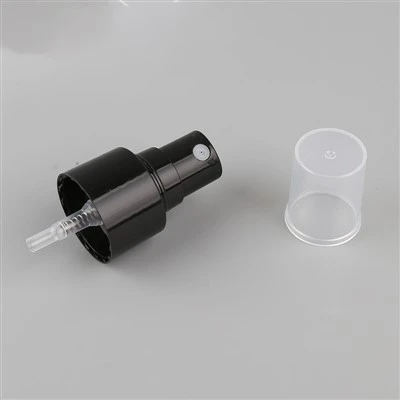
When I first started selling pumps, I assumed the goal was just to hold product and dispense a consistent dose. But within a year, I got a call from a daycare director in Chicago who’d pulled all our kid-sized soap pumps from their classrooms. “They’re either wasting half the bottle by pressing too hard and squirting soap all over the walls,” she said, “or crying because they can’t press hard enough to get any out.” That call changed everything. I started testing our pumps with actual kids—from 2-year-olds who could barely hold a crayon, to 5-year-olds with developing fine motor skills—and partnered with a pediatric occupational therapist to turn those tests into design tweaks. Now, the pumps we supply for family and commercial use aren’t one-size-fits-all; we have three distinct lines for different age groups, all built with kid’s capabilities in mind.
Let’s start with the science behind what makes a pump kid-friendly, because that’s where a lot of manufacturers cut corners. The biggest barrier for little hands isn’t strength—it’s dexterity and hand size. A typical adult pump requires about 15 to 20 pounds of pressure to activate, which is more than most 4-year-olds can muster. Occupational therapists I work with tell me that fine motor skills (the ability to coordinate small finger and hand movements) don’t fully develop until age 6 or 7. Before that, kids rely on their whole hands to grasp and press things, which means narrow, hard-to-grip pump levers or large, slippery bottles that slip out of small palms are major hurdles. That’s why our toddler line has wide, curved levers that sit lower on the bottle, so a whole small hand can wrap around both the lever and the base without strain. We also reduced the pressure needed to activate our toddler pumps to 8 pounds—something we tested with a group of 3-year-olds to make sure even the smallest hands could get soap out without help.
But here’s the catch: not all pump use is the same, and there’s a flip side to kid-friendly pump design. For younger kids, easy-to-press pumps can lead to overuse, and that’s not just about wasted product. Take hand sanitizer, for example. The CDC recommends using a quarter-sized dollop of alcohol-based sanitizer for proper germ kill, but our tests with 2- and 3-year-olds showed they’d press a pump 5, 6, even 10 times in one go if it was too easy, leading to a palmful of sanitizer that drips onto floors, clothes, or (worse) into their eyes. That’s why our preschool line adds a tiny, intentional amount of resistance—12 pounds of pressure—plus a “lock” feature that requires twisting the pump’s head to prevent accidental presses when a kid is carrying it. It’s a balance: we wanted to make it accessible, but not so accessible that it leads to mess or misuse.
Another big factor is safety, which is often overlooked in conversations about pump dispensers for kids. A common fear parents have is that a kid will take off the pump head, chew on it, or swallow the product inside. That’s a legitimate concern—studies from the American Association of Poison Control Centers show that more than 12,000 children under 5 are exposed to personal care products every year, many from pump bottles that don’t have child-resistant features. The key here is that “child-resistant” doesn’t mean “kid-proof” (nothing is), but it does mean it meets the ASTM F3159 standard for child-resistant packaging, which requires that no more than 20% of children under 5 can open it within 5 minutes, while 90% of adults can. A lot of cheap pumps skip this, making their screw-on heads easy for curious toddlers to twist off. That’s why all our kid-focused pumps have pump heads with tamper-evident seals and child-resistant locking mechanisms—you have to press and twist at the same time to remove the head, which stops most little kids from getting to the product inside.
I’ll be honest, though—I’ve also seen situations where pumps are a bad fit for kids, and it’s not the pump’s fault. For example, if you put a full-sized 8-ounce lotion pump on a bathroom counter that’s too high for a 4-year-old to reach, that’s a problem, not the pump’s. We recently supplied a set of pumps to a family in Texas with two kids under 4, and their feedback was that the counter was installed for adult height, so even our toddler-sized pumps were out of reach. Their solution was a low, stable step stool, and suddenly the pumps worked perfectly. That’s why I always tell customers—whether they’re families, daycares, or schools—pumps aren’t just a product, they’re part of a system. The pump’s design has to match the kid’s size and skill, and the environment has to be set up to support that. For daycares, that means placing pumps at 18 to 24 inches off the ground, which is the height recommended by the National Association for the Education of Young Children (NAEYC) for toddlers and preschoolers. For schools, we work with facilities teams to mount pumps on adjustable brackets so they can be moved down for younger grades and up for older kids, eliminating the need for step stools in hallways and bathrooms.
One of the most common myths I hear is that pump dispensers are worse for kids than other options, like squeeze bottles or bar soap. Let’s debunk that with data. A 2022 study from the University of Arizona’s Environmental Health Science Department tested handwashing efficacy with 300 elementary school kids, comparing pump liquid soap, squeeze bottle liquid soap, and bar soap. The study found that pump dispensers had the lowest rate of cross-contamination—only 2% of pump samples had harmful bacteria, compared to 15% of squeeze bottles and 22% of bar soap (which is a hotbed for bacteria transfer when kids share a bar). That’s a huge win for public spaces like daycares and schools, where germs spread fast. The study also found that kids who used pump soap were more likely to wash their hands for the recommended 20 seconds, because the pump gives them a clear, consistent amount of soap, so they didn’t feel like they were “wasting soap” and rushed through the process. Squeeze bottles, on the other hand, often led to kids pressing too little, so they’d rinse their hands after just a few seconds to get the rest of the soap out.
Of course, no product is perfect. I’ve heard from customers about leaks, broken pumps, and pumps that stop working after a few uses. That’s why we stand behind every pump we supply, with a 1-year warranty and a free replacement program for any pumps that fail within that window. We also do free testing with facilities teams before we deliver large orders to make sure the pumps work with their specific product (thick lotions, for example, need a different pump than thin liquid soap). Last year, a school in Florida ordered 500 pumps for hand sanitizer, and their first batch had a few that clogged because the sanitizer was thicker than we tested for. We rushed out a revised pump head that worked perfectly, no extra cost, because our job isn’t just to sell a product—it’s to make sure it works for kids.
So, are pump dispensers suitable for kids? The short answer is yes, when they’re designed and used correctly. The long answer is that they’re one of the safest, most effective, and most hygienic options for kids, as long as you choose pumps built for their size and skill, and pair them with simple adjustments like appropriate mounting height and child-resistant locks. The mistake a lot of people make is assuming all pumps are the same, or that adult pumps work for kids. That’s like putting an adult shoe on a toddler— it’s going to cause problems, but that doesn’t mean shoes are a bad fit.
If you’re a parent looking for pumps for your home, a daycare director stocking classrooms, or a school administrator updating your facilities, we can help you pick the right pumps for your needs, test them, and make sure they work for the kids who will use them. We don’t do one-size-fits-all, because we know every space and every group of kids is different. We invite you to reach out to our team to discuss your pump dispenser needs, whether you’re ordering a handful for a family home or thousands for a large educational facility.
Cosmetic Packaging References
American Association of Poison Control Centers. 2023 Annual Report on Pediatric Exposures to Personal Care Products.
National Association for the Education of Young Children. Guidelines for Safe and Healthy Early Learning Environments, 2022.
University of Arizona Environmental Health Science Department. Handwashing Efficacy and Cross-Contamination Risks in Pediatric Settings, 2022.
American Occupational Therapy Association. Fine Motor Skill Development in Children Ages 2–8, 2021.
Jiangsu Welljoin Plastic Co., Ltd.
As one of the most professional pump dispenser manufacturers and suppliers in China, our products have good reputation in the market. Please rest assured to wholesale bulk premium pump dispenser from our factory. Good service and quality products are available.
Address: No.6 Chuangye Road, Xuanbao Industrial Park, Taixing, Jiangsu, P.R. China
E-mail: paul@welljoin.com.cn
WebSite: https://www.welljoin-pack.com/
