Yo! I’m a dude in the PCB supply game. You’re probably here ’cause you’re curious about common PCB materials. Well, you’re in the right place. I’ll break it down for you so you can understand which ones might work best for your project. PCB
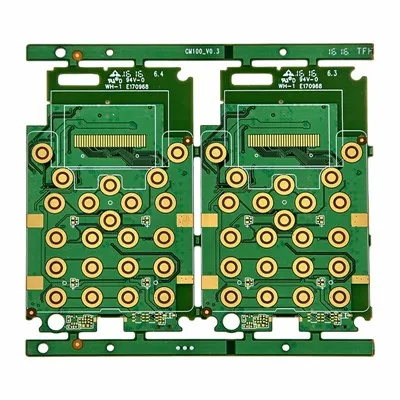
First up, let’s talk about FR-4. This is like the bread – and – butter of the PCB world. Almost everyone knows about it. FR – 4 is a fiberglass – reinforced epoxy laminate. Why’s it so popular? Well, it’s got a bunch of great features. For starters, it’s super affordable. When you’re on a budget and still need a reliable PCB, FR – 4 is your go – to. It also has good electrical insulation properties. That means it can effectively keep the electrical currents where they’re supposed to be on the board. Plus, it’s pretty durable. It can handle normal wear and tear during assembly and in its final application. You can find FR – 4 in all sorts of stuff, from your home routers to simple control boards in industrial equipment.
Another common material is CEM – 1. It’s a composite epoxy material. CEM – 1 is different from FR – 4 in a few ways. It’s cost – effective, which makes it a hit for mass – produced consumer products. The difference is in the core structure. While FR – 4 has a fiberglass core, CEM – 1 uses a paper core. This makes it a bit lighter, and it’s also easier to machine. But it’s not as good as FR – 4 in terms of electrical performance at high frequencies. You’ll often see CEM – 1 in things like remote controls, simple calculators, and some basic audio devices.
If you’re into high – frequency applications, then Rogers materials are something you should consider. These are high – performance laminates. They’ve got really low dielectric loss, which is crucial when you’re dealing with signals that are in the gigahertz range. For example, in 5G communication systems, where the signals are super fast and need to be transmitted with minimal loss, Rogers materials shine. They’re also very stable, which means they can maintain their electrical properties over a wide range of temperatures and humidity levels. But here’s the catch: they’re expensive. So, you only use them when you really need that top – notch performance.
PTFE, or polytetrafluoroethylene, is another material used in high – frequency PCBs. You might know it better by the brand name Teflon. PTFE has extremely low dielectric constant and loss tangent, which are ideal for high – speed and high – frequency circuits. It’s also very resistant to chemicals and has a high melting point. However, working with PTFE can be a pain. It’s difficult to bond components to it, and it requires special manufacturing processes. You’ll typically find PTFE in things like microwave antennas, radar systems, and some high – end aerospace electronics.
Aluminum is a unique PCB material. It’s a metal – based PCB. The big advantage of using aluminum is its excellent thermal conductivity. In applications where heat dissipation is a major concern, like LED lighting or power electronics, aluminum PCBs are a great choice. The aluminum core can quickly transfer heat away from the components, keeping them cool and extending their lifespan. But it’s not all sunshine and rainbows. Aluminum is a conductor, so you need to have a proper insulating layer between the circuit traces and the aluminum base to prevent short – circuits.
Now, ceramic PCBs are on the more specialized side. They offer outstanding thermal and electrical properties. Ceramics have high thermal conductivity, similar to aluminum, but they also have excellent electrical insulation. This makes them suitable for high – power and high – temperature applications, like in some military and aerospace electronics, as well as high – performance power modules. The downside is that they’re brittle and more expensive to manufacture compared to other materials.
When you’re choosing a PCB material, there are a few things you gotta think about. First is your budget. If you’re working on a low – cost consumer product, you’re probably not gonna go for Rogers materials or ceramic PCBs. You’ll stick with something like FR – 4 or CEM – 1. Then there’s the performance requirements. For high – frequency applications, you need materials with low dielectric loss, like Rogers or PTFE. And don’t forget about the environment where the PCB will be used. If it’s in a hot and humid place, you need a material that can handle those conditions without degrading.
As a PCB supplier, I’ve seen all sorts of projects, from small DIY gadgets to large – scale industrial systems. I know how important it is to choose the right material. That’s why I’m here to help. Whether you’re a hobbyist working on a cool new project or a big – time manufacturer looking for a reliable PCB source, I can offer you the right materials at a good price.
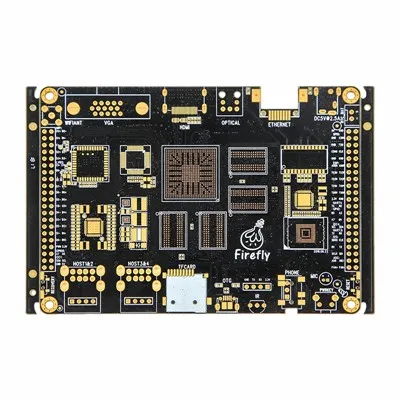
If you’re interested in getting some PCBs made for your project, don’t hesitate to reach out. We can have a chat about your specific needs, and I’ll help you pick the best material for the job. Whether you need a small batch for prototyping or a large – scale production run, I’ve got you covered.
Prototype PCB Assembly References
- Printed Circuit Board Handbook, by Clyde Coombs
- Electronic Packaging and Interconnection Handbook, by C. P. Wen
Huaswin Electronics Technology Co., Ltd.
With abundant experience, we are one of the most professional PCB manufacturers and suppliers in China. Welcome to wholesale customized PCB at competitive price from our factory. If you have any enquiry about pricelist, please feel free to email us.
Address: Building A2, Hao Hai Hong Industrial Park, No.3 Yu He Road, Gong He, Sha Jing, Bao An, Shenzhen
E-mail: sales@huaswin.com
WebSite: https://www.huaswin-pcba.com/
